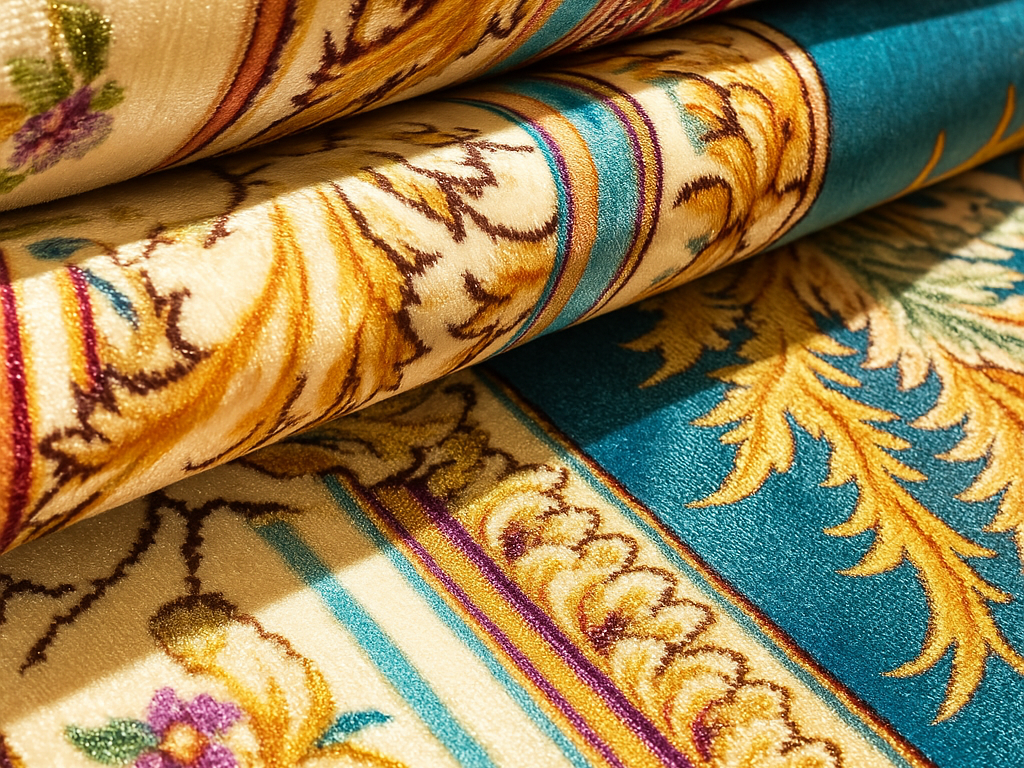
In recent years, eco-consciousness has moved from the periphery to the center of consumer decision-making. Home décor is no exception: more people are now asking, “Is this good for the planet?” when purchasing everything from furniture to rugs. For rug makers like Valhak, embracing sustainable tufted rug production isn’t just an ethical decision — it’s a long-term business strategy and a responsibility. In this article, we explore what makes tufted rugs eco-friendly, how sustainable production methods work, and what innovations are shaping the future of this craft.

1. Understanding Tufted Rugs: The Basics
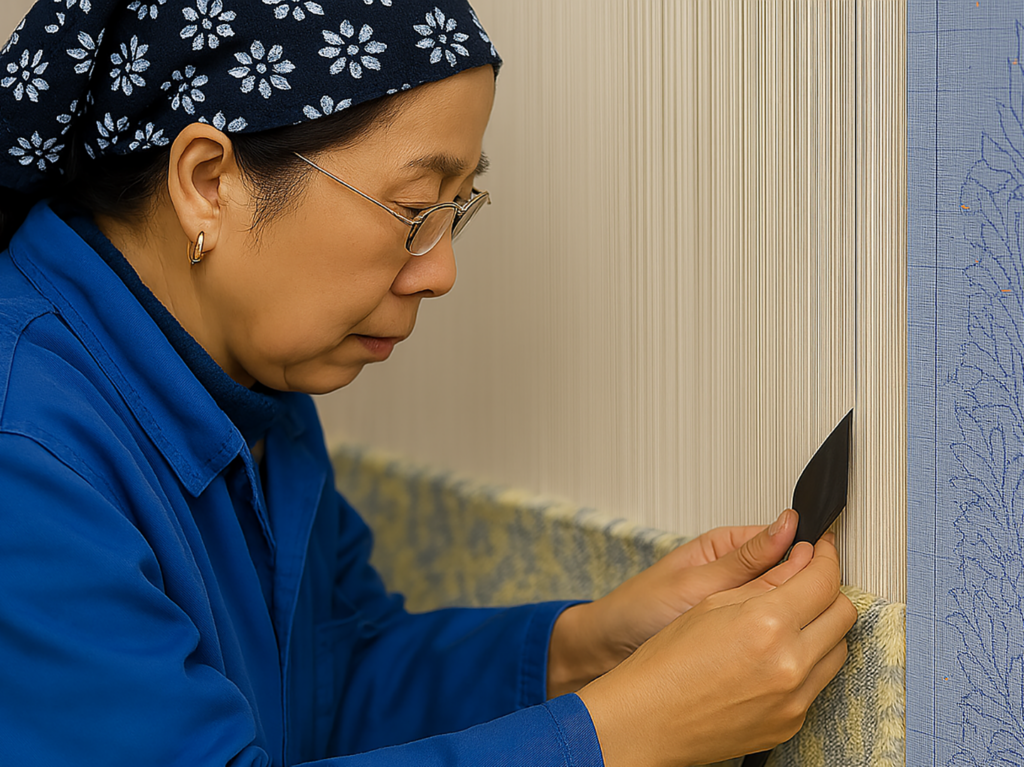
To appreciate the sustainability of a rug, it helps to begin with how tufted rugs are made. The classic tufting process involves punching yarns through a base fabric (primary backing), then locking the yarn in place with adhesive, and finally applying a secondary backing for stability.
- Yarn is inserted via a tufting gun into a taut canvas.
- Adhesive layer (often latex or PVA) binds the yarn tufts so they don’t unravel.
- Secondary backing (felt, cotton, synthetic fabric) reinforces and stabilizes the rug.
- Lastly, finishing touches such as shearing (trimming yarn to uniform height) and carving (cutting tufts differently to create texture) refine the design.
This method is efficient, versatile, and less labor-intensive than hand-knotted rugs — but without sustainability built in by design, it can also produce environmental burdens.
2. What “Eco-Friendly” Means for Tufted Rugs
When we call a tufted rug eco-friendly, we’re not just talking about one feature. Several elements need to align to make the full lifecycle of a rug more sustainable:
- Materials — choosing fibers that are renewable, recycled, or biodegradable.
- Adhesives and backing — using less harmful glues and recycled or more sustainable backings.
- Dyeing — employing low-impact or natural dyes, and minimizing water use.
- Energy and resource efficiency — reducing waste, recycling scrap, and powering operations sustainably.
- End-of-life considerations — designing for durability, recyclability, or biodegradability.
Let’s break these down in the context of tufted rugs.
3. Eco-Friendly Materials for Tufted Rugs
Natural Fibers
Wool: This is one of the most sustainable choices. Wool is renewable, biodegradable, naturally fire-resistant, and very durable. Because it’s a natural protein fiber, it also absorbs dyes deeply, giving richness in color and longevity. Ethical sourcing of wool — from farms that use regenerative grazing practices — further enhances its sustainability.
Plant-Based Fibers (Jute, Hemp, Cotton):
- Jute grows quickly and requires fewer pesticides and fertilizers, making it highly sustainable.
- Hemp is known for its low water requirement and rapid growth.
- Cotton can be more eco-friendly when grown organically. For tufted rugs, cotton often serves as the primary (base) fabric or backing, rather than the pile itself.
Regenerated Cellulose Fibers (Viscose, Bamboo): Some modern rugs use viscose made from wood pulp — for example, eucalyptus-based fibers are highly sustainable if sourced from FSC-certified forests. Bamboo silk is another low-footprint, plant-based fiber option.
Recycled/Synthetic Materials
Not all synthetics are bad if they close the loop of material use. Many sustainable rug makers now incorporate:
- Recycled Polyester (rPET): Fiber made from plastic bottles helps reduce plastic waste.
- Regenerated Nylon: Some industries reclaim discarded fishing nets or other industrial waste, transform them into high-quality nylon yarn, and use those in carpet production.
- Recycled Cardboard and Packaging: Even the cones that hold yarn can be made from recycled cardboard, reducing waste in the supply chain.
Certifications & Standards
Certifications like OEKO-TEX or GOTS (Global Organic Textile Standard) help ensure materials are free from harmful chemicals and are produced in socially responsible ways.
4. Sustainable Production Methods
Material choice is just the start. Sustainable production involves rethinking every step of the process.
Efficient Tufting & Less Waste
- Minimizing Yarn Waste: After tufting, leftover yarn (from partial cones) can be collected and recycled back into production.
- Recycling Scrap: Offcuts and trimmings from rug production can be re-dyed or reused elsewhere.
- Low-Impact Adhesives: Instead of synthetic glues, using natural latex can reduce environmental harm.
- Eco Backings: Some companies use patented backings made from recycled plastic bottles (Ecotrust felt) — turning waste into structure.
Dyeing & Chemical Management
- Wastewater Treatment: Dye houses can implement water treatment systems so that dye bath water is reused or processed before discharge.
- Low-impact or Natural Dyes: Using plant-based or low-toxicity dyes reduces VOC emissions and chemical runoff.
Energy Use & Emissions
- Factories increasingly run on renewable energy. Some rug facilities use solar power or biofuels (e.g., rice husk–derived) to reduce carbon emissions.
- Efficient manufacturing design — such as better-insulated buildings, wastewater reclamation, and energy-efficient machinery — all help reduce the environmental footprint.
Ethical Labor Practices
Sustainability also includes social responsibility. When rug makers pay fair wages, prioritize safe working conditions, and support artisan communities, they elevate the human side of sustainability.
Initiatives like Valhak help ensure rugs are not made with exploitative labor practices. Meanwhile, community-driven models preserve traditional craftsmanship and provide economic stability.
Circular Design & End-of-Life
- Durability: Designing tufted rugs to last — e.g., using resilient yarns like wool or recycled polymers — reduces the frequency of replacement.
- Recycling: Some manufacturers take back used rugs to recycle or repurpose fibers.
- Biodegradability: Natural fiber rugs (wool, jute, hemp) are more likely to decompose when disposed of responsibly.
5. Innovations in Sustainable Tufted Rug Design
A few exciting trends are pushing the sustainability envelope in tufted rug manufacturing:
Robo-Tufting & Automation
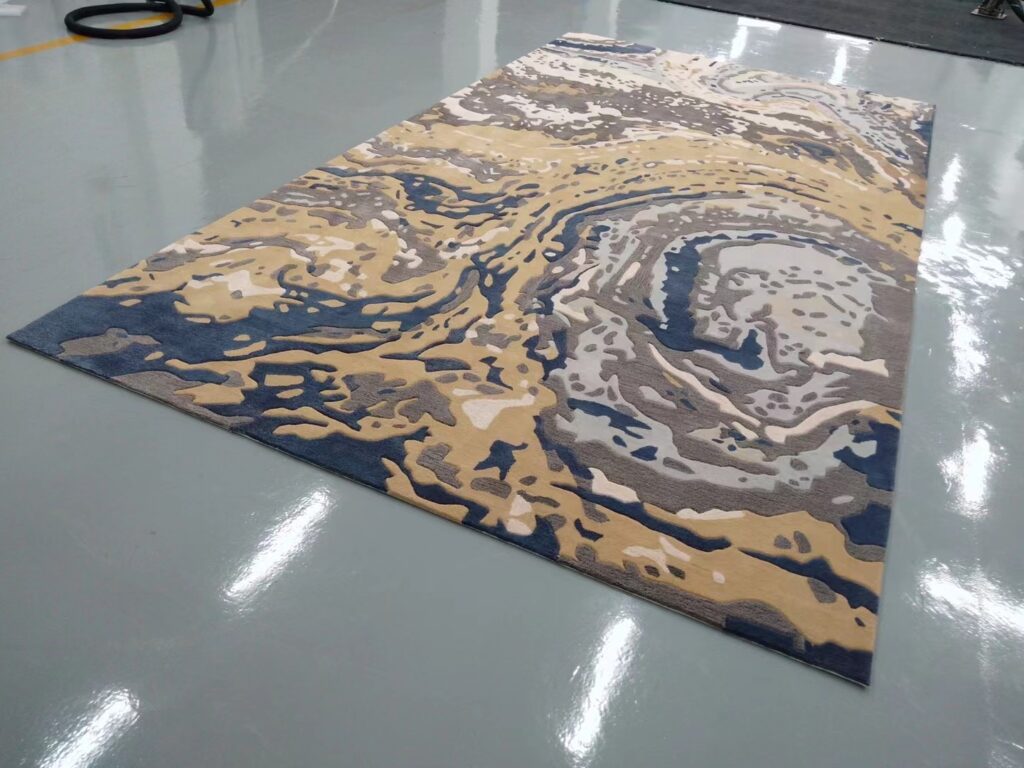
Automated tufting machines (sometimes called “robo-tufters”) enable precision, reduce human error, and minimize waste. They can tuft more densely and consistently, which helps reduce excess yarn usage.
Modular & Customizable Rugs
Brands are designing modular rugs — smaller units or tiles that can be rearranged, replaced, or repaired individually. This boosts longevity and discourages discarding entire rugs for small damages.
Some tufted rugs are also washable or reversible, which supports full-life usage and adaptability.
Traceable & Transparent Supply Chains
Leading sustainable rug brands are opening up their supply chains: showing where fibers come from, how they’re dyed, and how workers are treated. This transparency helps consumers make informed decisions.
Closed-Loop Recycling
Advanced recycling systems turn carpet or yarn waste back into raw materials. For instance, regeneration of nylon from fishing nets or plastic bottles helps close the material loop.
6. The Role of Certification & Industry Standards
Sustainable tufted rugs benefit greatly from third-party certification. Here are a few important ones:
- OEKO-TEX Standard 100: Certifies that the textiles are tested for harmful substances, ensuring they are safe for humans.
- Global Recycled Standard (GRS): Verifies recycled content and responsible production.
- GOTS (Global Organic Textile Standard): For organic fibers, ensuring they’re grown without harmful chemicals.
- GoodWeave: For ethical labor practices in carpet production.
These certifications aren’t just marketing: they provide verifiable accountability for environmental and social practices.
7. Challenges & Trade-offs in Eco-Friendly Tufted Rugs
While the move toward sustainable tufted rugs is gaining momentum, it’s not without challenges:
- Cost: Natural or recycled materials (e.g., wool, rPET yarn) can be more expensive than conventional acrylic or virgin synthetics.
- Performance: Some eco fibers may behave differently — for instance, recycled wool may not tuft or shear as predictably. Indeed, tufters have reported that certain recycled wools are delicate and harder to work with.
- Supply chain complexity: Sourcing FSC-certified wood pulp, recycled nylon, or traceable wool requires rigorous tracking and can be logistically challenging.
- End-of-life recycling: While recycling is ideal, not all regions have the infrastructure to take back used rugs.
- Adhesive limitations: Natural latex is greener, but may not perform identically in all climates or applications compared to synthetic adhesives.
Despite these challenges, many brands are making intentional investments because the consumer demand and environmental case are strong.
8. Why Valhak Is Committed to Sustainable Tufted Rugs
At Valhak, sustainability isn’t just a buzzword — it’s embedded in how we design, source, and manufacture. Here’s how we’re walking the talk:
Eco-Conscious Materials
- We use responsibly sourced wool, recycled polyester yarn, and plant-based fibers.
- Our backing materials include felt made from recycled bottles, reducing plastic waste.
Safer Adhesives
- Whenever possible, we apply natural liquid latex that minimizes chemical toxicity.
- Our bonding process ensures stability without compromising flexibility.
Water & Energy Efficiency
- Our dyeing facilities recycle water and treat wastewater onsite.
- We power our operations increasingly with renewable energy, and we continue to explore environmental upgrades.
Less Waste, More Circularity
- Leftover yarn is collected and sent back to suppliers or reused.
- We’re building infrastructure to bring back used rugs — to recycle or upcycle them responsibly — extending their life.
Transparency & Ethics
- Our supply chain is open: where fibers come from, how our artisans work, and what labor standards we enforce.
- We partner with certifying bodies to validate our sustainability claims.
9. Why Consumers Should Choose Eco-Friendly Tufted Rugs
When a consumer selects an eco-friendly tufted rug, the benefits go far beyond mere aesthetics. These rugs represent a significant step toward more sustainable, healthier, and value-driven living. Here’s a deeper look at why choosing sustainable tufted rugs is such a smart move:

Health & Indoor-Air Quality Benefits
Reduced Chemical Exposure
Many conventional rugs emit volatile organic compounds (VOCs) from synthetic backings, adhesives, and chemically treated fibers. These emissions can contribute to poor indoor air quality and may irritate the respiratory system. In contrast, eco-friendly rugs made from natural or recycled materials (like wool, jute, or recycled PET) often avoid or minimize these harmful chemical treatments.
Hypoallergenic Properties
Natural fibers such as wool, jute, and cotton tend to be more allergy-friendly. They don’t trap as many irritants in the same way synthetic fibers might, and because they often lack harsh chemical finishes, they can reduce triggers for sensitive individuals.
Improved Allergen Management
Rugs — especially those with dense or tufted construction — act as “traps” for dust, pet dander, and pollen, holding these particles within their fibers so they can be gradually removed by vacuuming rather than circulating freely in the air. Natural-fiber rugs make this even more effective because they’re less likely to off-gas or break down into dust, making regular cleaning more impactful and less risky for indoor air quality.
Safe for Families (Kids & Pets)
Eco-friendly rugs crafted without toxic treatments give peace of mind — especially in homes with children or pets. Natural fibers and low-VOC production methods reduce the risk of exposure through skin contact or inhalation.
Long-Term Value, Durability & Comfort
Durability Equals Longevity
High-quality natural fibers, such as wool, are remarkably resilient. Wool fibers have natural elasticity, bouncing back from foot traffic and furniture compression. This means a well-made eco rug can last for many years — even decades — reducing the need for frequent replacement.
Cost Efficiency Over Time
Because sustainable tufted rugs tend to last longer, they can offer better long-term value. Even if the upfront cost is somewhat higher, you save money over time by not replacing worn-out rugs frequently. Eco-rugs can also help with insulation: natural fibers like wool can help regulate indoor temperature, which means less heating or cooling is required.
Comfort Underfoot
Natural fiber rugs are often soft, warm, and comfortable. Whether you’re walking on them barefoot, standing for long periods, or simply lounging, they provide a pleasant tactile experience. Because they are less chemically treated, they often feel more “real” and less plastic-like than synthetic rugs.
Environmental & Sustainability Benefits
Lower Environmental Footprint
By opting for recycled or renewable materials — such as recycled PET yarns or sustainably sourced wool — consumers help lessen reliance on virgin petroleum-based fibers. This reduces the extraction of raw resources and lowers the carbon footprint associated with manufacturing.
Biodegradable and Compostable Options
Many natural fibers (wool, jute, cotton) are biodegradable. At the end of their useful life, these rugs can decompose more naturally, returning to the earth rather than filling landfills with persistent plastics.
Circular Economy Possibilities
Increasingly, rug makers are offering take-back or recycling programs. Materials that might otherwise be discarded are reclaimed, reprocessed, or reused — reducing waste and closing the loop.
Ethical & Transparent Production
Eco-friendly tufted rugs often come from companies committed to ethical labor and sustainable practices. When brands share supply-chain details — where fibers come from, how workers are treated — consumers can support makers who align with their values.
Better for Social Responsibility & Ethics
Supporting Regenerative & Ethical Practices
Choosing sustainable rugs often means backing more than just material sustainability: it can involve supporting regenerative farming (for wool or plant fibers) and fair labor practices. This kind of purchasing helps promote more responsible production models.
Certifications Provide Trust
Consumers who opt for eco-friendly rugs can look for credible certifications to verify sustainability goals:
- OEKO-TEX Standard 100 ensures the rug has been tested for harmful substances.
- GRS (Global Recycled Standard) confirms use of recycled materials.
- GOTS ensures organic fiber content and chemical restrictions. These certifications help consumers make informed, confident choices.
Conscious Lifestyle & Psychological Benefits
Aligning Purchases with Values
Many eco-conscious consumers feel a strong sense of alignment when their purchasing choices reflect their values — be it environmental responsibility, health, or social equity. Choosing a sustainable tufted rug can feel meaningful, not just decorative.
Long-Term Satisfaction
Because sustainable rugs are often made to last, consumers don’t have to compromise on style or quality. This longevity, combined with environmental integrity, often leads to greater satisfaction over time — both for the product and for the conscience.
Resale & Legacy Potential
High-quality, durable eco-rugs can be passed down, resold, or repurposed. That helps reduce overall consumption and allows consumers to view their rug not merely as a disposable item, but as a long-term investment or even a legacy piece.
Practical & Maintenance Advantages
Ease of Maintenance
Many eco-friendly tufted rugs are designed for longevity and practicality. Their natural fibers may shed less, and because they’re made without harsh chemical finishes, cleaning them is often more straightforward and safer for indoor air.
Insulation & Energy Efficiency
As mentioned, natural fiber rugs can improve insulation, reducing heat loss. That can help lower energy bills in colder months.
Reduced Waste Through Durability
Since eco-rugs are often more durable, they generate less waste over time. Rather than discarding and replacing rugs every few years, consumers can enjoy their rugs for much longer, reducing landfill contribution.
10. Conclusion
Sustainability in tufted rug production is not a passing trend — it’s a transformation. By combining eco-conscious materials, ethical practices, and circular thinking, rug makers like Valhak are redefining what it means to make rugs responsibly. For consumers, eco-friendly tufted rugs are more than a design choice: they’re a statement of values, and a step toward a more sustainable future for our homes and our planet.
11. FAQs
Are tufted rugs eco-friendly?
Yes — particularly when made with natural or recycled fibers, non-toxic dyes, and environmentally conscious adhesives and backing.
What materials make a tufted rug green?
Sustainable tufted rugs often use wool, jute, hemp, recycled polyester, or regenerated nylon, combined with non-toxic adhesives and recycled backing.
Do eco-friendly tufted rugs last as long as traditional ones?
They can. When made with durable materials like wool or recycled synthetics and proper backing, they often have a long lifespan — especially with good care.
How are sustainable tufted rugs recycled?
Some brands offer take-back programs. Fibers like wool or nylon can be reclaimed and reprocessed; backing materials made from recycled PET can sometimes be reused.
How can I tell if a rug is truly eco-friendly?
Look for trusted certifications (e.g., OEKO-TEX, GRS, GOTS). Ask about materials, dyeing processes, and whether the manufacturer uses recycled or natural adhesives and backing.