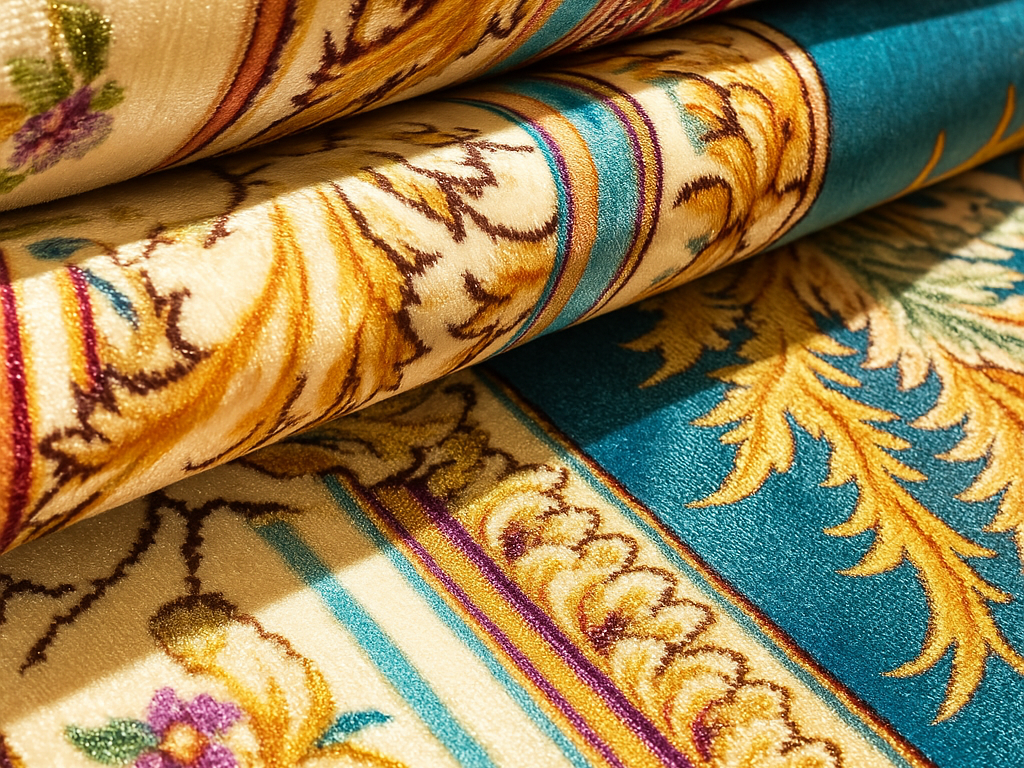
La externalización de la fabricación de alfombras a Asia, en particular a China, ofrece enormes oportunidades para una marca como Valhak. La rentabilidad, la escala de la industria textil y los fabricantes experimentados pueden combinarse para ayudarle a ofrecer a sus clientes alfombras tufting de alta calidad a precios que mantienen unos márgenes saludables. Pero el éxito no es automático. Requiere disciplina, diligencia debida y una mentalidad que anteponga la calidad. A continuación, le explicaré algunos consejos sobre el abastecimiento y las prácticas de control de calidad, especialmente relevantes cuando se fabrican alfombras tufting para el mercado occidental.
1. ¿Por qué Asia (China) y qué tienen de especial las alfombras?
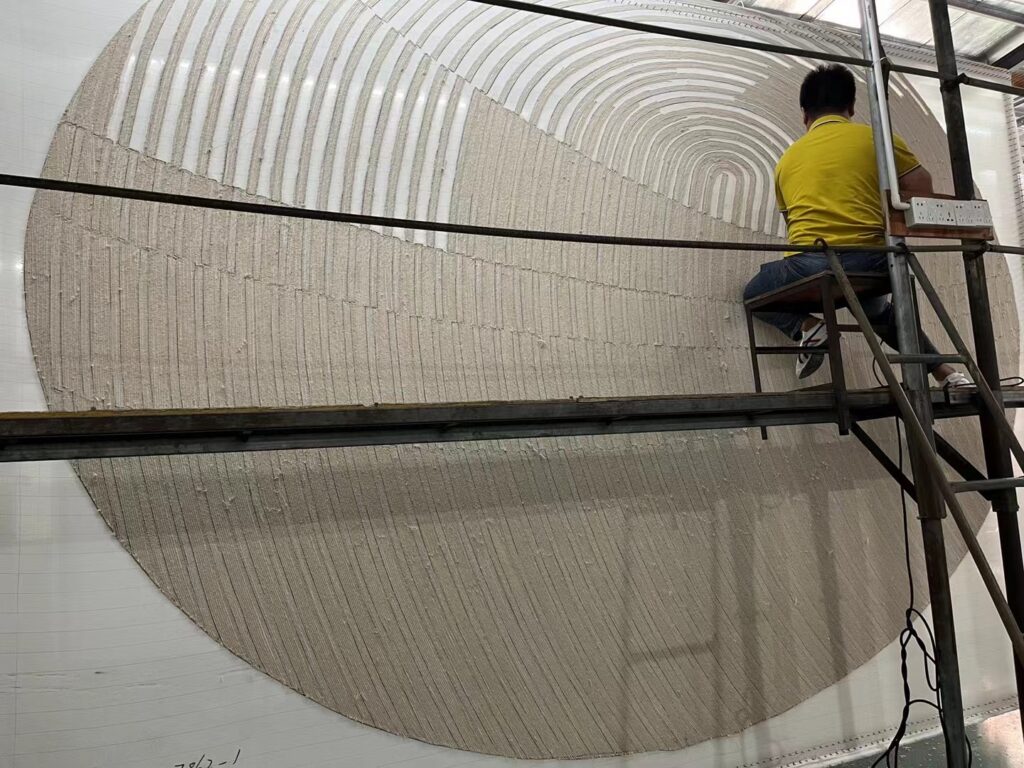
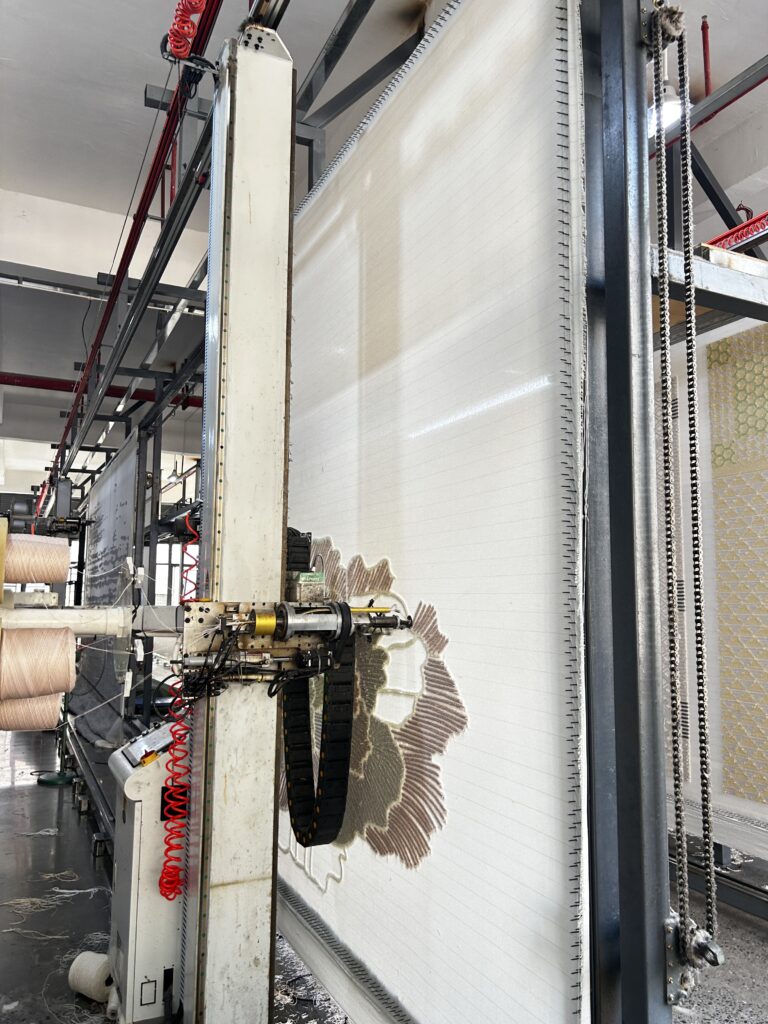
Asia sigue siendo el centro mundial de la fabricación de textiles y decoración del hogar. En el caso de las alfombras, especialmente las fabricadas a máquina o alfombras de pelo insertado (ya sean fibras sintéticas o mezcladas), las fábricas chinas ofrecen mano de obra experimentada, variedad de materiales y costes competitivos de mano de obra y materiales, ventajas que son difíciles de igualar en otros lugares.
Pero importar alfombras no es lo mismo que comprar baratijas genéricas o aparatos electrónicos. Las alfombras tienen material, peso, tinte, altura de la pila, El acabado, el embalaje e incluso los requisitos de conformidad (para tintes o tratamientos químicos): cada uno de estos aspectos puede determinar la calidad y la longevidad de la alfombra.
Esto significa que cuando se adquieren alfombras en Asia, hay que tratar el proceso como una fabricación seria: selección de proveedores, establecimiento de especificaciones, muestreo, inspecciones, logística, documentación.
2. Consejos para la búsqueda de proveedores: cómo encontrar el proveedor adecuado para alfombras con pelo insertado
A continuación, se indican medidas prácticas y señales de alerta a tener en cuenta a la hora de adquirir alfombras, especialmente alfombras de pelo insertado — de Asia.
Lanza una red amplia, pero examina cuidadosamente
Comience su búsqueda con varios candidatos. Utilice mercados B2B (por ejemplo, directorios comerciales), pero no se limite a los resultados de la búsqueda. Reúna entre 10 y 15 proveedores potenciales y, a continuación, reduzca la lista a entre 3 y 5 basándose en criterios clave.
Al evaluar, no se fije solo en el precio:
- Historia y estabilidad de la empresa — Los proveedores con una trayectoria más larga suelen ser más fiables que las empresas de reciente creación.
- Certificaciones y credenciales — Solicite la licencia comercial, la licencia de exportación y, a ser posible, las certificaciones textiles o de gestión de la calidad (por ejemplo, ISO 9001).
- Especialización en alfombras/textiles — Es preferible que las alfombras (o la decoración del hogar/textiles) se encuentren entre sus principales líneas de productos. Una fábrica especializada en productos no relacionados puede carecer de los conocimientos técnicos necesarios para la fabricación de alfombras.
- Experiencia en exportación y referencias de clientes — Las fábricas acostumbradas a exportar suelen comprender mejor las expectativas de los compradores occidentales en materia de embalaje, documentación y cumplimiento normativo. Solicite referencias o ejemplos de exportaciones anteriores.
Trata esta evaluación como lo harías con un socio fabricante serio, porque, en efecto, eso es lo que son.
Utilice ferias comerciales y mercados, pero verifique la información de forma independiente.
Las ferias comerciales (o mercados) son ideales para descubrir proveedores e inspeccionar alfombras en persona, pero no garantizan la legitimidad. Muchas guías señalan que asistir a ferias o mercados mayoristas puede ayudarle a comparar opciones de forma directa.
Aunque un proveedor parezca adecuado a primera vista, es fundamental verificarlo: comprueba si tiene un sitio web independiente, búscalo en Google, inspecciona la ubicación de su fábrica (incluso a través de satélite o Street View) y busca comentarios o reseñas de compradores anteriores.
Piensa en las plataformas como un punto de partida, no como una garantía.
Solicite muestras (y tal vez pequeños pedidos de prueba) primero.
Nunca realice un pedido al por mayor sin ver muestras reales con sus propias manos. Una muestra le ayuda a evaluar: la densidad del pelo, la precisión del color, la consistencia del tinte, el tacto, el reverso, el acabado e incluso el embalaje. En el caso de las alfombras tufting, estos son indicadores de calidad fundamentales.
De hecho, muchos compradores experimentados tratan la muestra como un “mini contrato”. Si la muestra supera su inspección, se realiza un pequeño pedido “de prueba” —no a gran escala— para verificar que el proveedor puede replicar la muestra en la producción en masa. Esto evita la trampa habitual en la que el proveedor entrega una muestra excelente, pero la producción en masa es completamente diferente.
Especifique claramente sus requisitos, hasta el más mínimo detalle.
Cuando se ponga en contacto con los proveedores, su solicitud de presupuesto (RFQ) o hoja de especificaciones debe ser clara, concisa y detallada. Para una alfombra con pelo insertado, las especificaciones pueden incluir: altura del pelo, densidad del pelo, tipo de hilo y contenido de fibra (sintético, lana, mezclado), tipo de revestimiento, acabado de los bordes, tolerancias en el tamaño de la alfombra, peso del revestimiento, método de teñido, requisitos de embalaje, etc.
Las descripciones ambiguas o vagas son una causa habitual de desacuerdos, defectos o problemas de calidad inesperados más adelante. Incluya también información clara sobre los plazos de entrega, la capacidad de producción, la cantidad mínima de pedido (MOQ), las condiciones de pago, los incoterms y los costes de las muestras frente a los de la producción en serie.
La comunicación transparente y la documentación clara no son opcionales, son fundamentales.
Considera trabajar con un agente de abastecimiento (especialmente al principio)
Si no tiene presencia en Asia, no habla mandarín o carece de conocimientos locales, puede que merezca la pena invertir en un agente de abastecimiento (o una empresa de abastecimiento). Los agentes suelen tener redes locales, entienden la dinámica de la cadena de suministro y pueden ayudarle a gestionar la selección de proveedores, las auditorías de fábricas, las inspecciones, la logística e incluso las aduanas.
3. Control de calidad: porque las alfombras son productos complejos
Una vez que haya seleccionado un proveedor, y antes de realizar un pedido grande, el control de calidad se convierte en su herramienta más poderosa. En el caso de las alfombras con pelo insertado, en las que la uniformidad del pelo, la consistencia del tinte, el ribete, el reverso y el embalaje son factores importantes, el control de calidad no es un lujo, sino una necesidad.

Establecer un plan de control de calidad: preproducción, proceso, inspección final.
Las buenas prácticas recomiendan un proceso de control de calidad estructurado con al menos tres etapas: inspección previa a la producción, durante el proceso y previa al envío.
- Preproducción: Antes de iniciar la producción en masa, confirme los materiales (hilo, soporte, tintes), verifique que la fábrica haya comprendido sus especificaciones y, tal vez, inspeccione las materias primas.
- Durante la producción (en proceso)Realizar comprobaciones aleatorias en puntos críticos, por ejemplo, una vez que se haya tejido o montado un determinado número de alfombras, para detectar defectos de forma temprana. De este modo se evitan fallos en lotes completos.
- Inspección previa al envío / Inspección final: Inspeccione una muestra representativa (por ejemplo, un porcentaje del lote o unidades aleatorias) para comprobar la densidad/altura de la pila, el color, el tamaño, el reverso, los bordes, el acabado, el embalaje, el etiquetado, la cantidad, etc. Utilice una lista de verificación.
Una lista de control de calidad adecuada podría incluir: especificaciones de los materiales; medición de la altura y densidad de las pilas; soporte y adhesivo de las pilas; acabado de los bordes; consistencia del color y el tinte; tamaño y peso; normas de embalaje; etiquetado o etiquetas colgantes; resistencia de las cajas de envío.
Considere los servicios de inspección/auditoría de terceros.
Aunque confíes en tu proveedor, suele ser aconsejable contratar a una empresa de inspección externa, especialmente al principio o para pedidos importantes. Las agencias de servicios de inspección, muy comunes en China, proporcionan informes independientes y objetivos con fotos, recuentos de defectos, mediciones, etc.
Una inspección independiente ayuda a evitar el “sesgo del proveedor”: en ocasiones, los fabricantes pueden interpretar sus expectativas de calidad de manera diferente, o incluso intentar hacerle pasar productos que no cumplen con los estándares. Con un tercero, obtendrá un juicio imparcial y una imagen clara de lo que es aceptable y lo que necesita ser corregido.
Comuníquese con claridad y cree un ciclo de retroalimentación
El control de calidad no es algo puntual. Las buenas relaciones comerciales implican una mejora continua. Después de cada lote o pedido, envíe comentarios a su proveedor: destaque lo que cumplió con las expectativas, lo que no lo hizo y cómo se pueden mejorar los lotes futuros.
Establezca criterios de calidad claros e inclúyalos en su contrato o acuerdo: no solo directrices generales, sino tolerancias exactas, índices de defectos aceptables, normas de embalaje, requisitos de etiquetado y plazos. Esto reduce los malentendidos.
Además, mantenga una comunicación regular: proporcione fotos de la producción, actualizaciones sobre el progreso y vincule las expectativas a métricas en lugar de declaraciones vagas. El respeto cultural y las relaciones comerciales sólidas son muy importantes.
No optimices en exceso para obtener el precio más bajo.
Es tentador buscar el menor coste por unidad, especialmente en categorías de productos básicos como las alfombras. Pero, con demasiada frecuencia, un precio muy bajo esconde concesiones: un reverso más fino, hilos más baratos, tintes inconsistentes, acabados deficientes o embalajes endebles.
Si un precio es “demasiado bueno para ser verdad”, hay que tratarlo con precaución. A veces, pagar un poco más garantiza mejores materiales, mejor mano de obra y mayor consistencia. Para una marca como Valhak, este tipo de preservación de la calidad es fundamental para su reputación.
Plan de cumplimiento, logística y embalaje
Las alfombras no solo se envían, sino que deben soportar el embalaje, el transporte marítimo o aéreo, las inspecciones aduaneras y la entrega. Confirme que el proveedor conoce los requisitos de embalaje: embalaje resistente y protector, protección de los bordes, cajas seguras y palés si es necesario. Un embalaje deficiente a menudo destruye incluso las alfombras bien fabricadas durante el transporte.
Ten claros los Incoterms (por ejemplo, FOB, CIF, EXW), las condiciones de entrega, la responsabilidad del despacho de aduanas e inspecciona el embalaje antes del envío.
Además, comprueba si existen requisitos de cumplimiento en tu mercado objetivo, por ejemplo, restricciones sobre tratamientos químicos, tintes, etiquetado, seguridad contra incendios o documentación de importación. Aunque es posible que las alfombras no estén sometidas al mismo escrutinio que los juguetes o los productos infantiles, lo más recomendable es garantizar siempre el cumplimiento de la normativa.
4. Errores comunes y señales de alerta a tener en cuenta
Ningún proceso de abastecimiento está libre de riesgos. A continuación se indican algunos errores frecuentes y cómo evitarlos.
- Proveedores con credenciales o experiencia insuficientes. — Las fábricas nuevas y sin verificar suelen carecer de una calidad constante. Es posible que produzcan una muestra satisfactoria, pero fracasen en la producción en masa. Evite los proveedores sin licencia de exportación, con un historial deficiente o con poca especialización.
- Dependencia excesiva de fotos, correos electrónicos o promesas verbales. — Lo que se ve bien en una foto o suena bien en un correo electrónico puede no reflejar la realidad de la producción en la vida real. Por eso son importantes las muestras, las auditorías y las inspecciones.
- Omisión de pedidos de prueba pequeños antes de ampliar la escala — Se cometen muchos errores cuando los clientes pasan de las muestras a pedidos grandes sin comprobar la reproducibilidad. Esto suele dar lugar a grandes lotes de alfombras que no cumplen las expectativas, lo que resulta costoso y perjudicial para la marca.
- Descuidar la planificación del embalaje y la logística — Las alfombras bien hechas pueden llegar dañadas si el embalaje o la manipulación son deficientes. Especifique siempre las normas de embalaje e inspeccione el envío antes de su salida.
- Suponiendo que la calidad se mantenga estable a lo largo del tiempo. — Incluso los proveedores de confianza pueden volverse complacientes con los pedidos repetidos. Sin un control de calidad periódico, pueden surgir problemas. Es un error relajar el control de calidad solo porque los pedidos anteriores hayan salido bien.
5. Cómo se aplica esto a las alfombras con pelo insertado: consideraciones especiales para Valhak
Para una marca como Valhak, que vende alfombras con pelo insertado, los principios generales de abastecimiento y control de calidad descritos anteriormente cobran mayor importancia. A continuación se indican algunas consideraciones específicas:
- Consistencia del material y del pelo: Es fundamental elegir el hilo adecuado (sintético, natural o mezclado), la densidad del pelo y el revestimiento. Una altura o densidad irregular del pelo hace que las alfombras parezcan baratas o se desgasten de forma desigual con el tiempo.
- Solidez del tinte y del color: Las alfombras suelen estar expuestas a la luz, al tránsito peatonal, al aspirado y a la limpieza, por lo que una mala calidad del tinte puede provocar decoloración o sangrado. Exija especificaciones claras sobre el método de teñido y, si es posible, solicite pruebas de lavado en muestras.
- Adhesión del revestimiento y acabado de los bordes: El reverso debe ser lo suficientemente resistente como para soportar el tufting; los bordes deben estar bien acabados para evitar que se deshilachen. Los fallos en el reverso de las alfombras o los problemas en los bordes son problemas habituales con los proveedores de bajo coste.
- Embalaje para el transporte: Las alfombras son voluminosas, pesadas y pueden dañarse fácilmente durante su manipulación. Asegúrese de que el embalaje sea resistente, con protección en las esquinas, envoltura resistente al agua o la humedad (si es necesario) y cajas o palés resistentes.
- Repetibilidad entre lotes: A medida que Valhak crece y realiza más pedidos de alfombras a lo largo de las temporadas, la consistencia se vuelve fundamental. Los clientes notan las diferencias entre unas alfombras y otras (pelillo, tinte, tacto), y las devoluciones o quejas pueden arruinar rápidamente la reputación.
Porque estás creando una marca, no solo comprando alfombras comunes y corrientes: considerar el abastecimiento como una asociación a largo plazo e incorporar el control de calidad y la comunicación desde el principio te reportará beneficios multiplicados.
6. Establecer una relación duradera y basada en la confianza con su proveedor.
El abastecimiento de alfombras procedentes de Asia no tiene por qué ser una transacción puntual. De hecho, los mejores resultados se obtienen cuando se trata al proveedor como un socio a largo plazo. A continuación, le indicamos cómo hacerlo:
- Establezca una relación personal, sea respetuoso y comuníquese con frecuencia. Cultivar una relación es importante. Muchos en China prefieren hacer negocios con personas que conocen y en las que confían. Mantener un contacto regular, proporcionar información actualizada y demostrar que valoras la calidad y la coherencia ayuda a consolidar esa confianza.
- Proporcione comentarios constructivos después de cada pedido. Utilice informes de inspección, fotos y los comentarios de sus propios clientes para destacar lo que funciona y lo que hay que mejorar. Con el tiempo, esto moldea los hábitos de producción del proveedor para que se ajusten a sus estándares.
- Planificar una ampliación gradual. Empiece poco a poco con pedidos de prueba o ensayo. Una vez que esté satisfecho, aumente gradualmente el volumen de los pedidos. Evite pasar repentinamente a pedidos grandes: un crecimiento constante es menos estresante para ambas partes y reduce el riesgo.
- Considera la exclusividad o los contratos a largo plazo (si procede). Si un proveedor demuestra ser fiable y se ajusta a sus estándares, un acuerdo a más largo plazo (con especificaciones claras, requisitos de calidad y expectativas mutuas) puede estabilizar el suministro y los precios.
- No trate el coste como la única variable. Como se ha señalado anteriormente: la calidad, la consistencia, la fiabilidad en la entrega y el embalaje son factores importantes. Si se reduce demasiado el coste, se puede comprometer lo que hace que las alfombras Valhak sean valiosas para sus clientes.
7. Conclusión
El abastecimiento de alfombras con pelo insertado en Asia, especialmente en China, puede ser una decisión estratégica inteligente para una marca como Valhak. Las ventajas en cuanto a costes, la escala de fabricación y el acceso a fábricas textiles consolidadas son muy atractivas. Pero las ventajas solo se obtienen si se trata el abastecimiento como lo que es: la fabricación, con toda su complejidad.
Al examinar cuidadosamente a los proveedores, insistir en muestras y pedidos de prueba pequeños, especificar requisitos claros e incorporar un proceso de control de calidad sólido (inspección previa a la producción, durante el proceso y final), se sientan las bases para obtener alfombras de alta calidad y uniformidad. Si a esto se le suma una comunicación clara, ciclos de retroalimentación y respeto por su socio fabricante, se puede construir una cadena de suministro confiable y a largo plazo.
8. Preguntas frecuentes
P1: ¿Realmente necesito pedir muestras antes de realizar pedidos al por mayor?
Sí. Las muestras le permiten inspeccionar el pelo, el material, el tinte, el acabado, el reverso y el embalaje, y verificar que el proveedor comprende realmente sus especificaciones. Sin muestras, corre el riesgo de que los pedidos al por mayor lleguen con una calidad deficiente o con estándares inconsistentes.
P2: ¿Qué ocurre si el proveedor se niega a permitir inspecciones por parte de terceros?
Eso es una señal de alerta. Un proveedor fiable suele aceptar de buen grado los controles de calidad. Si se niega, puede indicar que no cuenta con procedimientos de control de calidad sólidos o que quiere ocultar defectos. En tales casos, debería reconsiderar la situación o insistir en la inspección.
P3: ¿Es necesario un agente de abastecimiento o podemos encargarnos nosotros mismos del abastecimiento?
Tú puede Busque usted mismo, especialmente si tiene tiempo, paciencia y cierta experiencia. Sin embargo, un agente de abastecimiento simplifica el proceso (evaluación de proveedores, auditorías, comunicaciones, inspecciones), lo que resulta especialmente útil si no tiene presencia local o solo habla inglés.
P4: ¿Con qué frecuencia debemos inspeccionar los lotes de producción?
Lo ideal es hacerlo en tres etapas: preproducción (materiales), durante el proceso (controles aleatorios a mitad de la producción) y antes del envío (inspección final). En el caso de pedidos repetidos, realizar controles de calidad al menos en cada lote, o periódicamente en el caso de la producción a largo plazo, ayuda a mantener la consistencia.
P5: ¿Qué debemos tener en cuenta en el embalaje y el envío?
Las alfombras necesitan un embalaje resistente: cajas de cartón sólidas, protección en las esquinas, envoltura resistente a la humedad/agua si es necesario, paletización segura. También es esencial disponer de la documentación de despacho, cumplir con las normas aduaneras y utilizar los incoterms correctos para evitar daños y retrasos en el envío.