When shopping for a tufted rug, size and shape are as essential as color and material. Getting this wrong can make a room feel disjointed, cramped, or visually off. At Valhak, we believe a rug should anchor your space — not dominate or disappear.
In this guide, we’ll walk you through why size and shape matter, how to measure wisely, and practical tips to pick a tufted rug that fits beautifully with your furniture and flow.
1. Why Rug Size and Shape Matter
A rug isn’t just a decorative piece underfoot. When sized and shaped correctly, a tufted rug anchors your design, defines conversation zones, and offers comfort underfoot. When the size or shape is off, however, the room can feel disjointed or unbalanced.
Here’s what to think about:
- Visual balance: The right rug brings cohesion to your furniture arrangement. Designers consistently warn against rugs that are too small—because they can make a room feel fragmented.
- Functionality: In high-traffic areas like dining rooms or hallways, the rug must allow for movement without getting in the way.
- Proportion: There’s a helpful “two-thirds rule” for living rooms: your sofa should be about two-thirds the length of the rug.
- Comfort: For bedrooms, proper rug size ensures you have a soft landing when you get in and out of bed.
- Framing vs. wall-to-wall carpeting: Experts recommend leaving some floor exposed around a rug — too much rug wipes out the frame, but too little ruins the grounding effect.
2. Measuring Your Room and Furniture
Before making any decisions, you’ll need to take accurate measurements. This step ensures you choose a rug that truly fits.

Measure the room
- Measure the full floor area: Use a tape measure to get the exact length and width of the room. Note any odd walls, alcoves, or projections.
- Mark out key zones: If you have different functional zones—e.g., a seating area, dining nook, or workspace—measure each separately as well.
Measure your furniture
- For the living room, measure your sofa, chairs, coffee table, side tables, and how they’re arranged.
- For the dining room, measure the table plus the chairs when pulled out (this tells you how much rug you need under the chairs).
- For the bedroom, measure your bed (length and width), nightstands, and how far you’d like the rug to extend beyond the bed.
Visualize with tape
One of the most effective tricks: use painter’s tape (or even newspapers/cardboard) to outline the rug’s proposed dimensions on the floor.
Doing this helps you:
- See scale in real time
- Confirm traffic flow (make sure the taped outline doesn’t block doorways or create awkward paths)
- Check furniture placement (does the sofa leg sit where you want it?)
3. Choosing Rug Size and Shape by Room
Here’s how to think about rug size and shape for different rooms, drawing on expert advice and best practices.

Living Room
Common sizes: Medium living rooms often use 8′ × 10′ rugs; larger spaces may go up to 9′ × 12′.
Furniture placement strategies:
- All legs on: Ideal when you have room — place all furniture legs (sofa, chairs, coffee table) on the rug.
- Front legs on: If space is tight, placing just the front legs on the rug still grounds the layout.
- Avoid floating rugs that just go under the coffee table — they can feel disconnected.
Proportion rule: Use the two-thirds rule — if your sofa is, say, 8 feet wide, aim for a rug around 12 feet long (so the sofa is roughly two-thirds the rug length).
Border space: Leave 12 to 18 inches of exposed floor between the rug edge and the walls for balance.
Size selection by furniture length (per Mohawk guide):
| Furniture length | Recommended rug size |
| Up to 4 ft | 5′ × 7′ or larger |
| 5 ft | 6′ × 9′ or larger |
| 6 ft | 7′ × 10′ or larger |
| 7 ft | 8′ × 10′ or larger |
| 8 ft | 9′ × 12′ or larger |
Dining Room
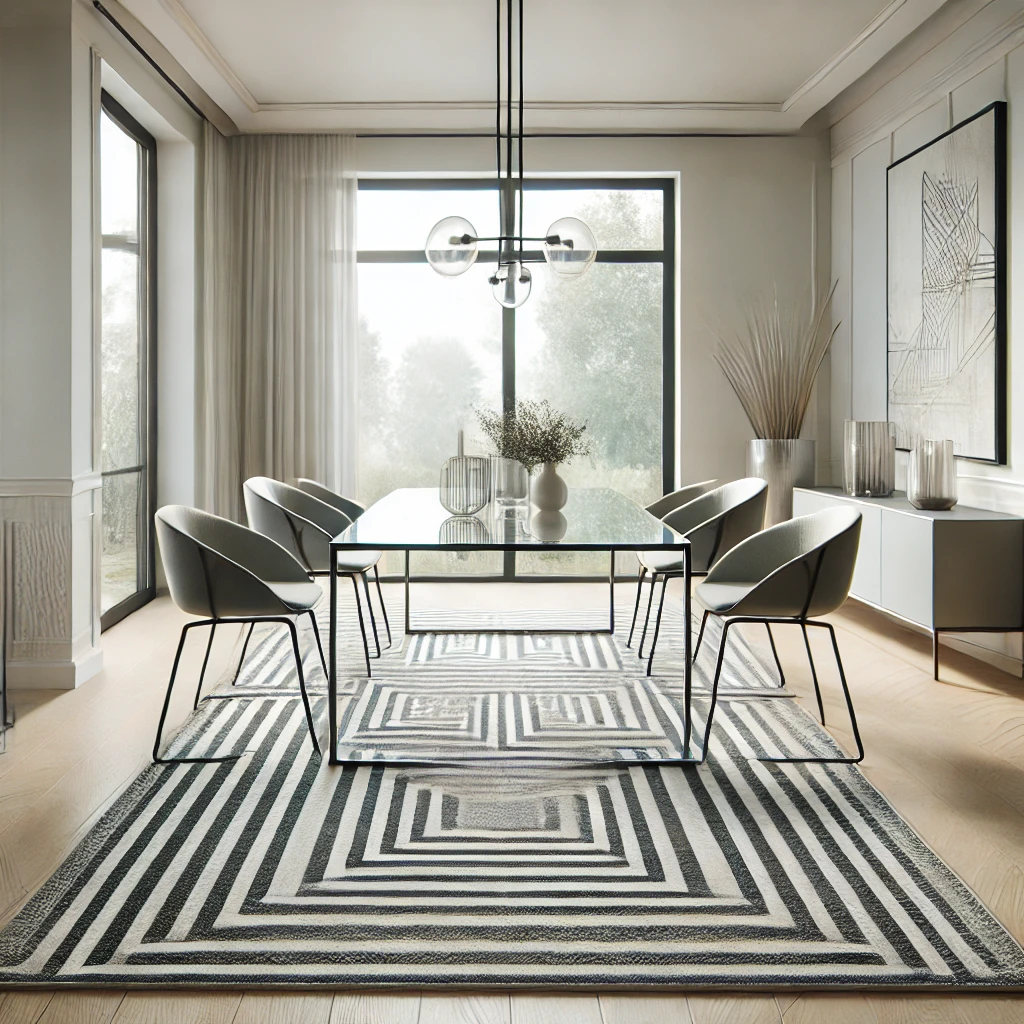
Rule of thumb: Ensure the rug is large enough that chairs stay on it, even when pulled out. Good advice is to add about 24 to 30 inches of rug around all sides of the table.
Shape considerations:
- For rectangular dining tables, a rectangular rug often works best.
- If you have a round table, a round rug can mirror its shape, but make sure there’s enough space for chairs.
Traffic: Because dining chairs slide, flatter or low-pile tufted rugs are often safer and more practical.
Bedroom
Sizing by bed:
- Twin bed: 5′ × 8′ is commonly sufficient.
- Full bed: 6′ × 9′ or a pair of runners work well.
- Queen bed: 8′ × 10′ is recommended.
- King bed: 9′ × 12′ gives generous coverage.
Placement:
- Center the rug under the bed, letting it extend beyond the foot and sides.
- If placing under nightstands, size the rug so the nightstands sit fully on it; otherwise, you might choose a smaller rug and use runners.
Border: Aim for around 18–24 inches of rug visible past the bed edge, based on guidance from Valhak’s sizing advice.
Hallways and Entryways
- Use runners for long, narrow spaces. Common sizes are around 2.5′ × 7′ or 3′ × 10′.
- Leave 4–6 inches of floor visible on each side of the runner in a hallway to create symmetry.
4. Rug Shape Matters — Not Just Size
Once you’ve nailed down your room’s dimensions, think about the shape of the rug. The shape you choose can reinforce the layout and harmony in your space.
- Rectangular Rugs: This is the most common and versatile shape. It works in most living rooms, dining rooms, and bedrooms.
- Square Rugs: Great for square rooms, or where your furniture is symmetrically arranged.
- Round Rugs: Ideal for circular tables or small, cozy seating areas. Round rugs soften corners and naturally draw attention to a central point.
- Oval or Runner Rugs: Useful for hallways or elongated spaces. Runners also work well beside beds or under console tables.
- Irregular or Freeform Shapes: These can bring an artistic or custom touch. For example, an oval or abstract shape can work under a curved sofa or in a modern, free-flowing living space.
Reddit designers note that there are no “set rules,” but balancing shape and proportion against the room layout is key
5. Practical Tips for Buying a Tufted Rug
eyond size and shape, here are some practical, actionable tips that will help you choose and maintain a tufted rug:
Choose material wisely
- For high-traffic areas (living rooms, dining rooms), go for durable fibers like wool or wool blends.
- In low-traffic or cozy areas (bedroom, reading nook), a higher-pile tufted rug feels luxurious.
Pad it
Use a high-quality rug pad underneath. It helps with grip, prevents slipping, extends the life of the rug, and adds comfort.
Check pile height and door clearance
High-pile tufted rugs are plush, but make sure doors can open and close over them.
Rotate regularly
To keep wear even, rotate your rug every six months, especially if one area sees more foot traffic.
Clean with care
- Vacuum gently.
- Blot spills as soon as they happen—do not rub.
- Use professional rug cleaning once a year or as recommended.
Use visual tools
- Painter’s tape (outlined earlier) helps with both shape and size.
- Sketch or use digital room layout tools to visualize how different sizes and shapes will look.
Order samples
Many rug brands (including Valhak) offer sample swatches or smaller versions so you can test the feel, pile, and color in your space.
6. Common Mistakes to Avoid When Choosing a Tufted Rug
Even with the best intentions, people often make errors when choosing a rug. Here are some of the most common pitfalls—and how to avoid them.
Buying too small
This is perhaps the most frequent mistake. Experts consistently warn against undersizing your rug, because it can make the room feel fragmented or unbalanced.
Choosing the wrong shape
Picking a shape purely because you like it, without considering the room’s lines or furniture layout, can backfire. A round rug in a sharply angular, formal space might feel out of place; an irregular rug in a cramped room might feel cluttered.
Neglecting borders
If you place a rug that touches baseboards, it may visually overpower the room.
Ignoring door clearance
Not accounting for pile height can mean doors don’t open properly, or your rug gets damaged by door scraping.
Skipping visualization
Failing to map the rug’s dimensions on the floor (with tape or swatches) can lead to surprises—either that the rug is too small, too large, or awkwardly placed.
Buying on impulse
Because rugs are often one of the last finishing touches, buyers might pick something quickly. Instead, invest time in measuring, visualizing, and if possible, ordering a sample.
7. Conclusion
Choosing the right tufted rug size and shape for your room isn’t just about picking a pretty design—it’s about anchoring your space, defining zones, and enhancing both aesthetics and function. By measuring your room and furniture, visualizing with tape, and understanding shape dynamics, you can make a choice that feels thoughtful and intentional. Combine that with practical tips—like using a pad, rotating the rug, and cleaning properly—and you’ll have a beautiful, cozy piece that elevates your space for years.
8. FAQs
Q1: How much space should I leave between the rug and the wall?
A: Ideally, about 12–18 inches (30–45 cm) of exposed floor around a large rug.
Q2: Can I put a round tufted rug in a rectangular room?
A: Yes — a round rug can soften the corners and add visual interest, as long as it’s sized proportionally to the seating arrangement.
Q3: Is a high-pile tufted rug suitable for dining rooms?
A: Generally, no. High-pile rugs may be harder to clean and could wrinkle under chair legs. A lower pile or flat wool rug works better for dining areas.
Q4: Do I really need a rug pad?
A: Yes — a good rug pad prevents slipping, adds cushioning, protects your rug, and extends its life.
Q5: What if my room has an odd layout or angled walls?
A: Use painter’s tape to outline potential rug sizes and shapes. Also consider custom or irregular-shaped rugs to fit the unique geometry of your space.