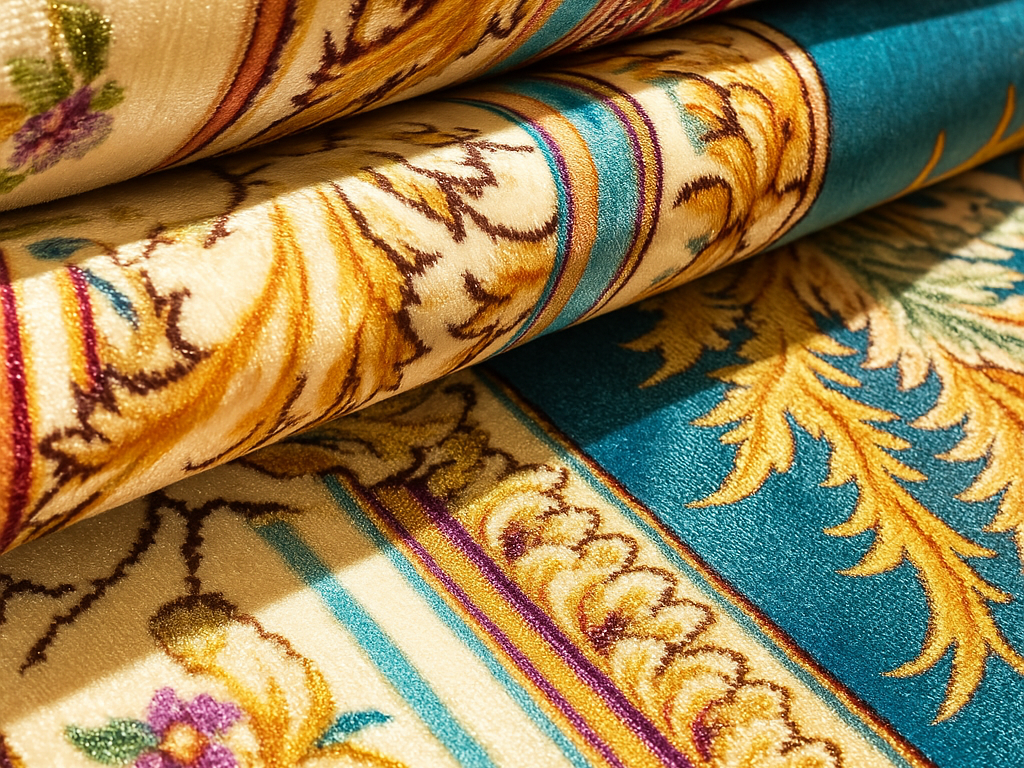
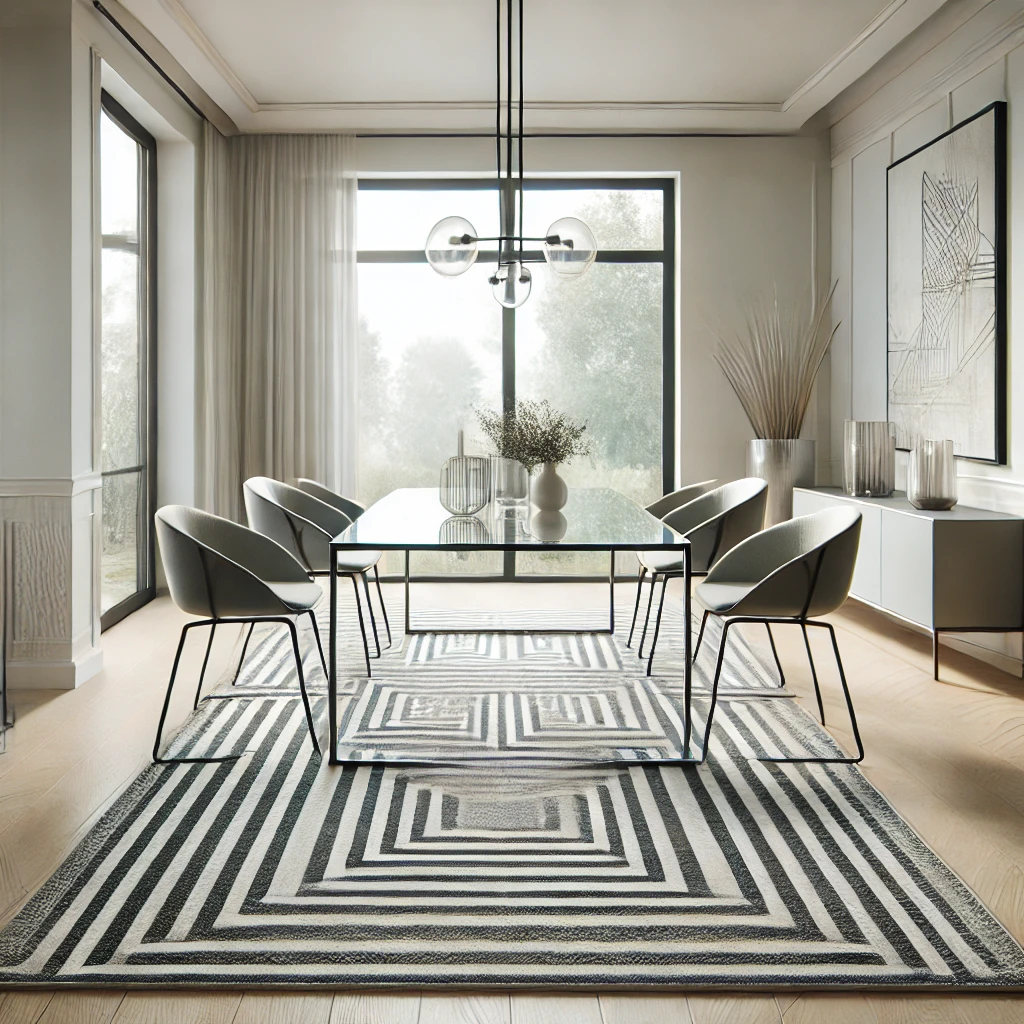
When it comes to making a room feel richer, more inviting, and layered with personality, few design moves are as effective — and underused — as layering rugs. For a brand like Valhak, which prides itself on quality and design, layering a tufted rug over another floor covering isn’t just a styling trick; it’s a way to transform a space. In this article, we explore why layering works, how to do it properly, and provide practical, actionable guidance so your rug becomes more than floor—so it becomes foundation.
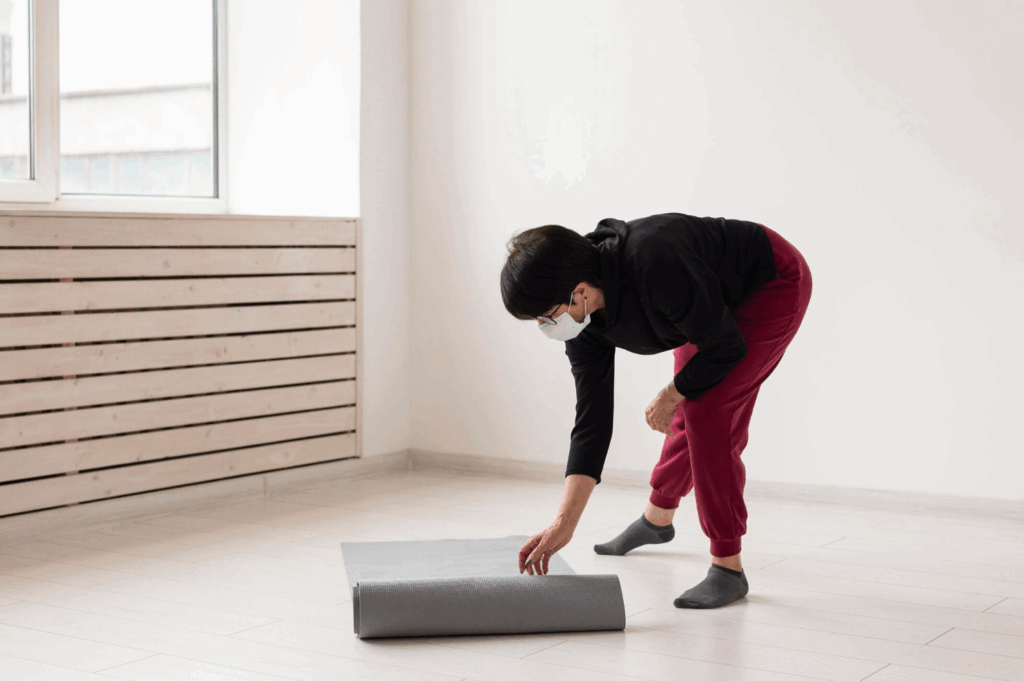
1. Why Layer Rugs? The Benefits Beyond Looks
Depth, Warmth & Texture
Layering rugs adds visual and tactile depth. A single, flat rug often feels one-dimensional. But stacking a plush, tufted rug atop a flatter, more understated base gives the floor surface a sense of layered richness — almost like layering fabrics in clothing. It invites touch, offers softness underfoot, and makes a room feel layered and lived in. This kind of textural contrast is widely recommended by interior designers.
Moreover, mixing materials — say a coarse jute or sisal base with a soft, luxurious wool or cotton tufted rug on top — creates a “rough + soft” dynamic that elevates the sensory experience.
Flexibility and Style Versatility
Layering allows homeowners to express style more flexibly. A neutral base rug provides a canvas; a statement tufted rug layered on top becomes a focal point. Over time, if tastes or seasons change, the top layer can be swapped out — giving you a fresh new look without buying a whole new rug collection.
Also, layering can make a rug that’s “too small” for a room work well — especially handy if the perfect large rug is out of reach, or if you want to feature a smaller, design-forward rug as an accent.
Defining Spaces & Zones
In open-plan layouts or multifunctional rooms, layered rugs help define zones. A large base rug can cover most of a living area, while a smaller tufted rug on top could mark a reading nook, seating cluster, or coffee-table zone — giving structure and flow to the space.
Practical Protection and Comfort (Especially Over Existing Floors)
If you’re placing rugs over existing flooring — carpet, hardwood, or tile — layering can offer practical value. The top layer can protect the floor beneath from dirt, wear, and stains. It also adds insulation (thermal and acoustic) and can make underfoot walking softer, warmer, and more pleasant.
2. The Basics: What Makes a Good Base + Top Rug Combination
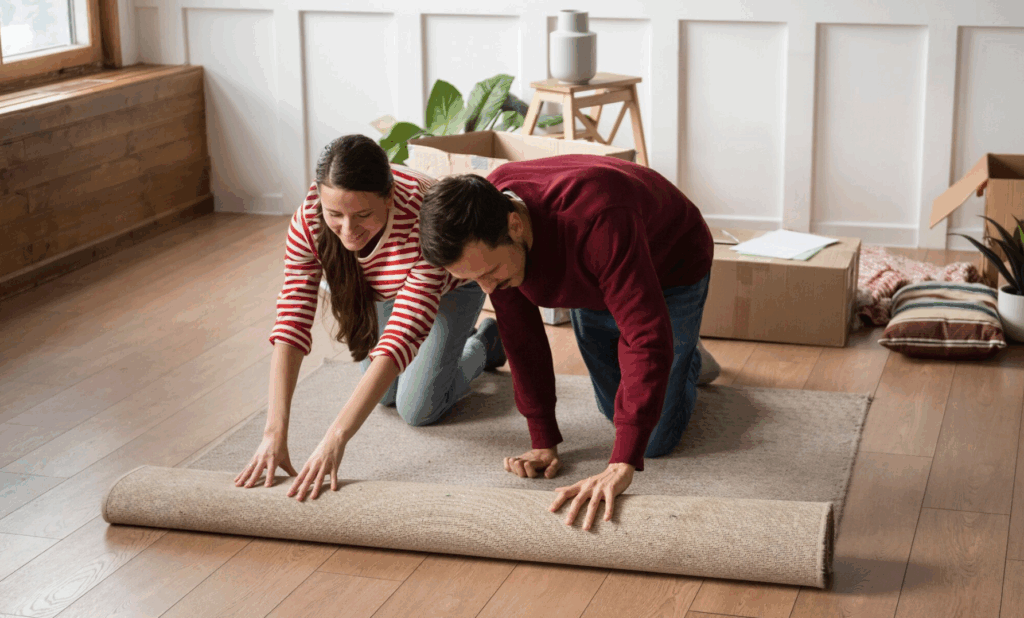
Choose the Right Base Rug
Your base rug should:
- Be large enough to anchor the room. It extends under furniture and sets the frame for the room.
- Be relatively neutral in color or pattern, or at least subtle enough not to compete visually with the top layer.
- Have a flat-weave or low pile, or be made from natural, durable fibers (jute, sisal, cotton, low-pile wool). These materials offer good support and stability for additional layers.
A base like this doesn’t overpower the room — instead, it provides a comfortable structural backdrop for more expressive top rugs.
Select the Top (Tufted) Rug Carefully
Your top rug is the star of the layering composition. For the top layer:
- Consider a smaller size than the base — often 1–3 feet shorter on each side. This allows the base to show around the edges and frames the top rug.
- Opt for richer texture (tufted, high pile, plush, wool, or soft cotton) or a bold pattern/ color. These will differentiate it from the base, drawing attention and creating that layered depth.
- When mixing patterns, think carefully about scale and harmony: if the base has a subtle geometric pattern, the top could be floral, tribal, or bold; if the base is patterned, a more solid or simply textured top is safer.
3. Practical Steps: How to Layer a Tufted Rug Over Another Floor Covering
Here’s a step-by-step guide tailored for a brand-conscious, quality-first environment.

Measure the Room & Map Out Furniture Placement
Before buying rugs, take accurate measurements of the room. Consider where furniture will sit (sofa, coffee table, chairs, bed, etc.). The base rug should ideally anchor major pieces — for example, the front two legs of sofas or chairs should rest on the base layer for cohesion.
For beds: it’s common to have at least the lower two-thirds of the bed rest on the rug, leaving some floor space around.
Also, when layering, give some visible border around the top rug — typically 6 to 8 inches (or more depending on room scale) on all sides. This border helps “frame” the top rug and avoids a cramped, crowded look.
Pick Your Base + Top Pair — Mindfully
Use the guidance above to select an appropriate base and top rug. For example:
- Base: 8×10 ft jute flatweave, neutral tone (beige, sand, ecru)
- Top: 5×7 ft tufted wool rug in a richer tone (e.g. deep charcoal, navy, rust) or with a distinct pattern
Or: base as a 9×12 ft neutral low-pile rug, top as a 6×9 ft plush tufted rug — enough contrast in size, texture, and color to make each layer visible and meaningful.
If the base rug has subtle patterning, consider a more bold or richly textured top; if the base is plain, you can go more expressive with the top.
Anchor & Secure — Don’t Skip This Step
One of the biggest risks in layering rugs is slippage, bunching, or even a tripping hazard — especially if the bottom layer is soft (like carpet) or if the top rug has a thick pile.
Here are your anchoring tools:
- Rug pads: Use a proper pad under the base rug for support. If layering over carpet, choose a “carpet-to-carpet” rug pad that grips both surfaces.
- Non-slip tape / double-sided rug tape (especially under the top rug), if necessary.
- Furniture anchoring: If possible, place heavier furniture so that it overlaps the edges of the rugs — this helps hold them flat and prevents shifting.
Layer with Intention: Color, Texture & Pattern Balance
- Color palette — Stick to 2–3 dominant tones overall. If your top rug has bold, deep color, ensure the base rug brings balance with neutral or complementary tones.
- Texture contrast — A flat-weave or low-pile base with a plush, tufted/ high-pile top rug creates a tactile depth that feels intentional and rich.
- Pattern management — If combining patterns, vary the scale. For example, a broad striped or geometric pattern on the base with a smaller-scale floral or tribal design on top. If unsure, let the top rug be patterned and keep the base simple (or vice versa).
Zone and Align According to the Room’s Function
Layer rugs in ways that anchor spaces: under a coffee table, beneath a bed (with the top rug extending beyond the sides if possible), or in a reading nook. A layered rug under a round coffee table — even if the base is rectangular — can create a cozy, intentional look.
You don’t necessarily have to align both layers perfectly. Offsetting the top rug — or placing it at a slight angle — can look casually elegant, especially in boho or eclectic interiors.
4. Special Considerations When Using a Tufted Rug as Top Layer
Because tufted rugs tend to be thicker, plusher, and more textured than flat weaves or low-pile rugs, layering them requires a bit more attention to detail. Here are some considerations — and advantages — when your top layer is a tufted piece.
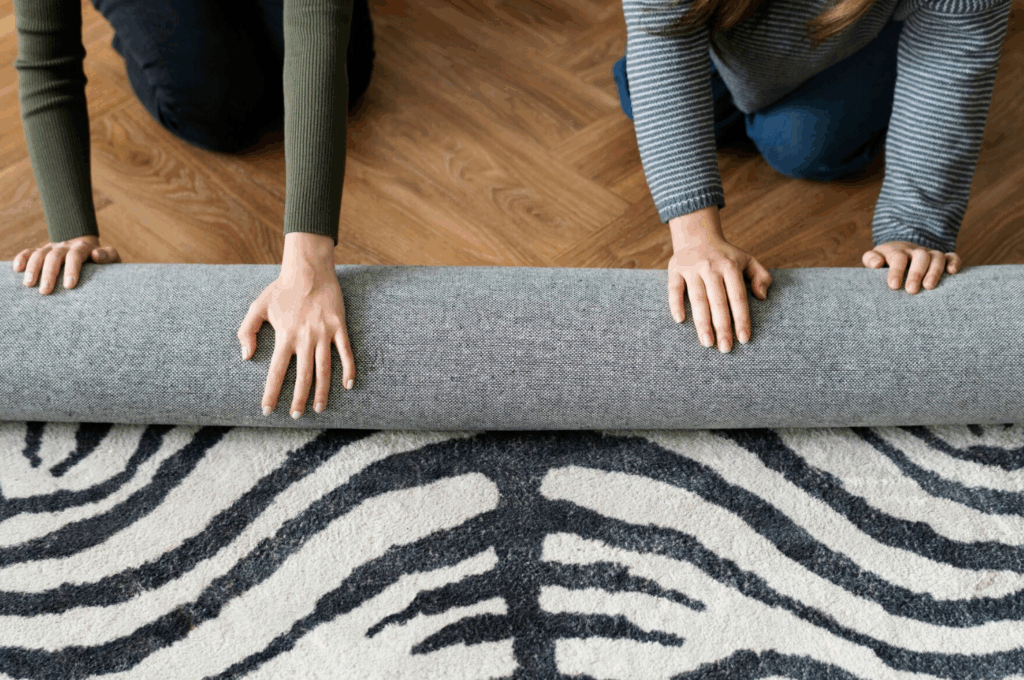
Pros
- Luxurious feel underfoot: Tufted rugs feel soft and opulent. Layering them over a simple base gives the room a “finished” look — like layered textiles in furniture or bedding.
- Visual emphasis: The tufted texture naturally draws attention. When paired with a more neutral underlayer, the top rug becomes a focal point.
- Warmth and comfort: Especially helpful in colder climates or on bare hardwood/tile floors — tufted rugs add insulation, sound dampening, and a cozy atmosphere.
Caveats & How to Avoid Them
- Pile height & tripping hazard: Too-thick rugs over another covering — especially carpet — risk creating uneven surfaces. Solution: use a flat or low-pile base, and a rug pad underneath the tufted rug to even out thickness and stabilize it.
- Shifting or bunching: Carpets, plush bases, or slick floors can make a tufted rug slide, wrinkle, or ripple. Use carpet-to-rug pads or double-sided tape; consider anchoring under furniture.
- Overwhelming the room visually: If both rugs are highly textured, patterned, or bold, the room may feel busy or cluttered. Keep one layer subdued — often best the base — to give the top layer room to shine.
5. Mistakes to Avoid (Common Pitfalls in Rug Layering)
From experience and design guidance, these are some common missteps — and how to avoid them:
- Two busy patterns or colors: It’s tempting to throw two beautiful rugs together. But often, they compete visually. Better: keep one layer simple.
- Ignoring rug pads / anchoring: Without anchoring, rugs shift — which looks sloppy and can be dangerous. Always pad, tape, or anchor under furniture.
- Pile height mismatch: Stacking two thick rugs leads to awkward floor height, especially under furniture — think of chair legs or bed frames. Use flat base + plush top for balance.
- Forgetting scale and proportion: A too-small base rug under a large top rug (or vice versa) can look unbalanced. Follow sizing rules: base should extend beyond top layer sufficiently.
- Over-layering many rugs: More isn’t always better. Two layers is often enough. Too many — three or more — can make a space feel cluttered or heavy.
6. How to Do It Right: A Sample Scenario (Living Room Example)
Let’s imagine a living room where you want to use a tufted rug from Valhak as the top layer. Here’s how you might plan and execute the layering.
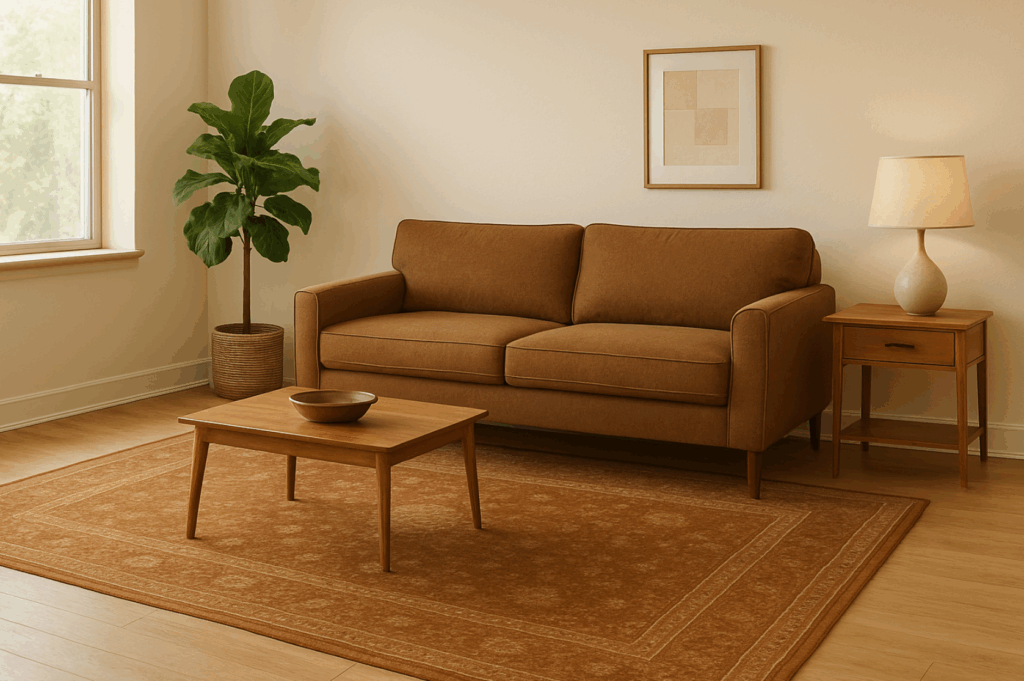
Room & Furniture Layout
- Room is 16 ft x 12 ft.
- Sofa and two chairs centered around a coffee table.
- Desire: define seating area, add comfort and style, maintain flow to other parts of the room.
Choosing Rugs
- Base rug: 9 ft x 12 ft, natural fiber flat-weave (jute or low-pile wool), neutral tone (e.g., light beige or soft dove gray).
- Top rug (Valhak tufted): 6 ft x 9 ft or 7 ft x 10 ft, richer tone (e.g., charcoal, deep navy, rust), plush pile, maybe with a subtle pattern or simple solid tone.
Placement & Alignment
- Lay base rug so it spans under the sofa and chairs — for example, the front two legs of the sofa and chairs rest on it.
- Center top rug under the coffee table, ensuring you leave at least 6–8 inches of base rug visible around the edges.
Anchoring & Safety
- Use a full rug pad under the base rug.
- Add a second, thinner carpet-to-rug pad under the tufted rug (if layering over carpet) or double-sided rug tape if over hard floors.
- Ensure corners under heavier furniture (like sofa legs) to help secure rugs in place.
Final Touches
- Once rugs are in place, walk the room: look for any wrinkles or bumps, adjust as needed.
- Step back and observe: does the top rug stand out as a focal area? Does the base provide a comfortable frame? Does the layering feel intentional — not accidental?
If everything feels balanced, you’ve succeeded. The layered rugs don’t just cover the floor — they shape the room.
7. Conclusion
Layering a tufted rug over another floor covering is more than a design trend — it’s a foundational styling technique. It adds depth, warmth, and flexibility to your space. When done with intention — choosing the right base, selecting a striking top rug, balancing color, pattern, and texture, and anchoring safely — the result is a room that feels designed, layered, and lived-in. For a brand like Valhak, which values quality, design, and customer satisfaction, embracing rug layering in your styling and content strategy is a natural fit.
8. FAQs
Q1: Can I layer a tufted rug over carpet?
Yes — but with precautions. Use a “carpet-to-rug” pad or double-sided tape under the top rug to prevent slipping or bunching. Heavy furniture anchoring also helps keep layers stable.
Q2: What if my base rug is patterned? Will that clash with a patterned top rug?
It can, if not done carefully. The safest move: use a patterned top rug over a neutral base, or a neutral top over a patterned base. If you mix patterns, ensure one design is subtle and the other bold, and keep the color palette cohesive.
Q3: Is layering multiple rugs (more than two) ever recommended?
Generally no. More than two layers tends to look cluttered, bulky, or visually heavy. Two layers — base + top — is often enough to achieve depth, texture, and zone definition without chaos.
Q4: Will layering rugs make cleaning harder?
A bit — but manageable. It’s a good idea to occasionally lift the top rug and vacuum or clean underneath, as dirt can accumulate between the layers. Treat spills on top immediately, and periodically rotate rugs to ensure even wear.
Q5: My tufted rug is pretty thick. Won’t layering make the floor feel too high or uneven?
That’s a valid concern. To avoid this: pair the tufted rug with a flat or low-pile base rug, and use a thin but grippy rug pad underneath the top layer (rather than stacking multiple thick layers). This helps stabilize the height and keeps furniture placement balanced.