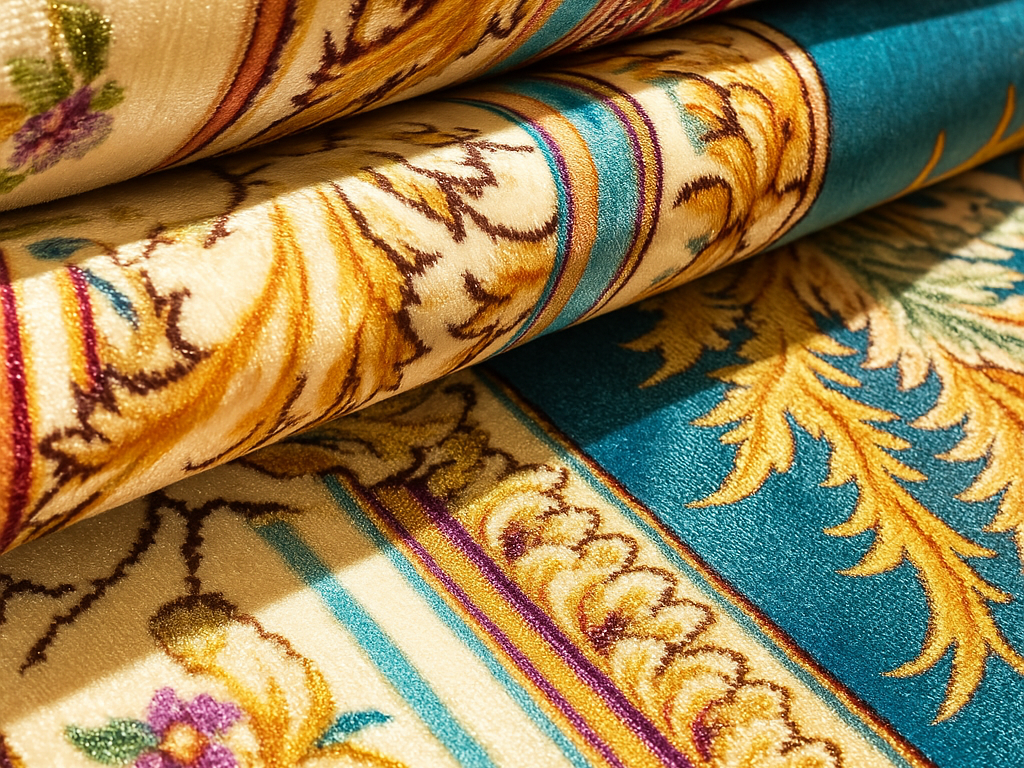
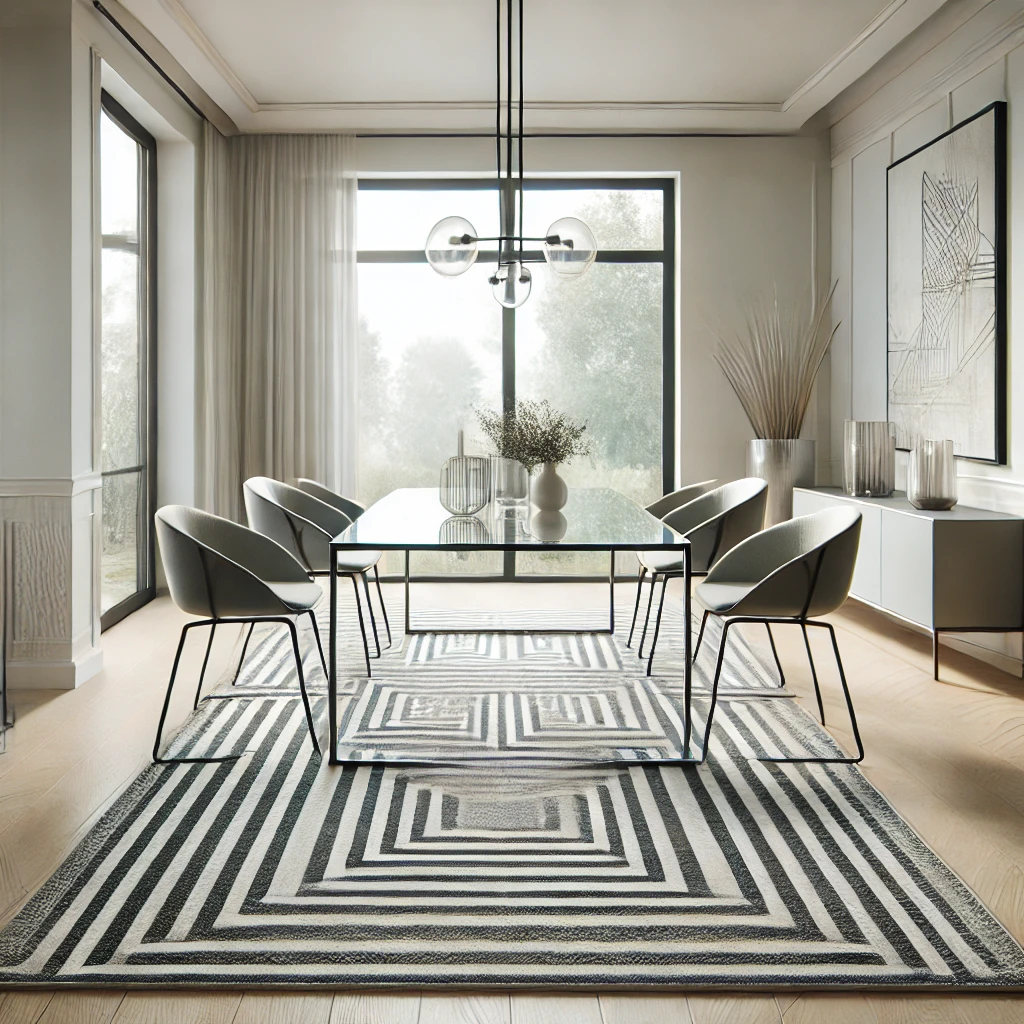
When choosing rugs for a home, few buyers think beyond color and size. However, two technical qualities—rug thickness (pile height) and pile density—play a pivotal role in how a rug performs, especially under furniture like chairs, dining tables, sofas, and occasional tables. Misjudging these can lead to functional headaches: chairs that catch, table legs that sink, and rugs that wear unevenly. In this long-form guide, we’ll demystify how these factors interact with furniture placement and give you practical, usable insights to make better choices—for every room.
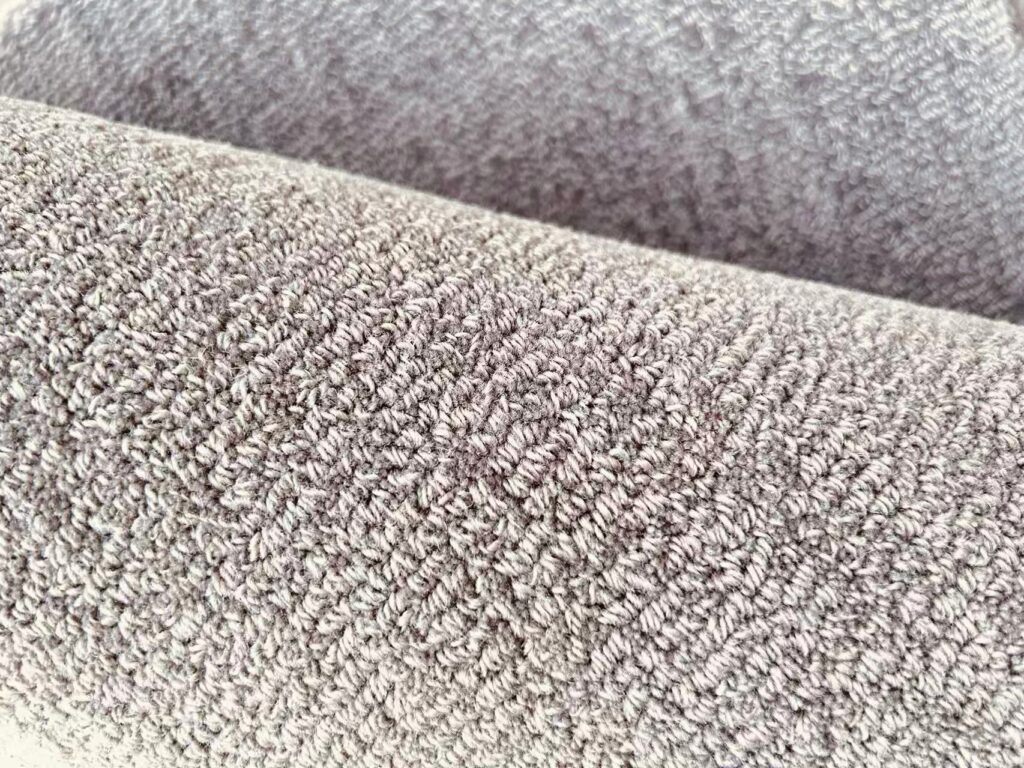
1. Rug Thickness (Pile Height): What It Is and Why It Matters
Pile height (often referred to simply as “rug thickness”) is the measurement from the surface fibers down to the backing of a rug. Tufted rugs generally fall into three broad categories:
- Low pile — short, firm fibers that sit close to the backing.
- Medium pile — the sweet spot for most homes, balancing softness with functionality.
- High pile — deep, plush fibers that feel luxurious but can be problematic under furniture if density isn’t also high.
While a tall pile feels luxurious and inviting, it also means more thickness underfoot—which can affect how furniture sits on or moves across the rug.
Key takeaway: Thickness isn’t just about feel—it directly impacts usability, especially with chairs and tables that need smooth, stable surfaces.
2. Pile Density: The Invisible Determinant of Performance
If pile height is how tall the fibers are, pile density is how closely packed they are. Two rugs with the same height can feel very different: one might feel lush and intact, and the other might flatten quickly under pressure. That’s pile density in action.
Why density matters:
- Higher density improves resilience and bounce-back.
- Dense piles resist crushing, matting, and indentations—important where furniture legs rest.
- Loose or sparse piles compress quickly when weight is applied.
This is why pile height and density must be considered together. A tall pile with low density will flatten faster than a lower, dense pile—and especially under furniture that doesn’t move often, like sofas and tables.
3. How Thickness & Density Actually Interact with Furniture
Furniture interacts with rugs in a mechanical, not just aesthetic, way. Here are the most important effects to understand:
Pressure Distribution
Furniture legs concentrate weight onto a small area. Even with thick rugs, if the density is low, those fibers compress leaving permanent indentations. On the other hand, a dense pile distributes pressure more evenly and recovers better.
Chair Movement
For chairs that slide (dining chairs, desk chairs), pile height matters a lot. Too high and chairs don’t glide easily—especially on plush, deep pile—leading to fabric wear or leg wobble.
Table & Stability
Thicker, high-pile rugs can make tables feel “wobbly” unless the pile is dense enough to resist shifting. Conversely, low pile rugs with high density provide a firm surface that feels stable and behaves predictably under consistent weight.
Summary:
- Higher pile + low density = instability under furniture.
- Medium pile + high density = optimal balance for most furniture.
- Low pile + high density = best for heavy, frequently moved furniture.
4. Chairs on Rugs — Sit, Slide, Repeat
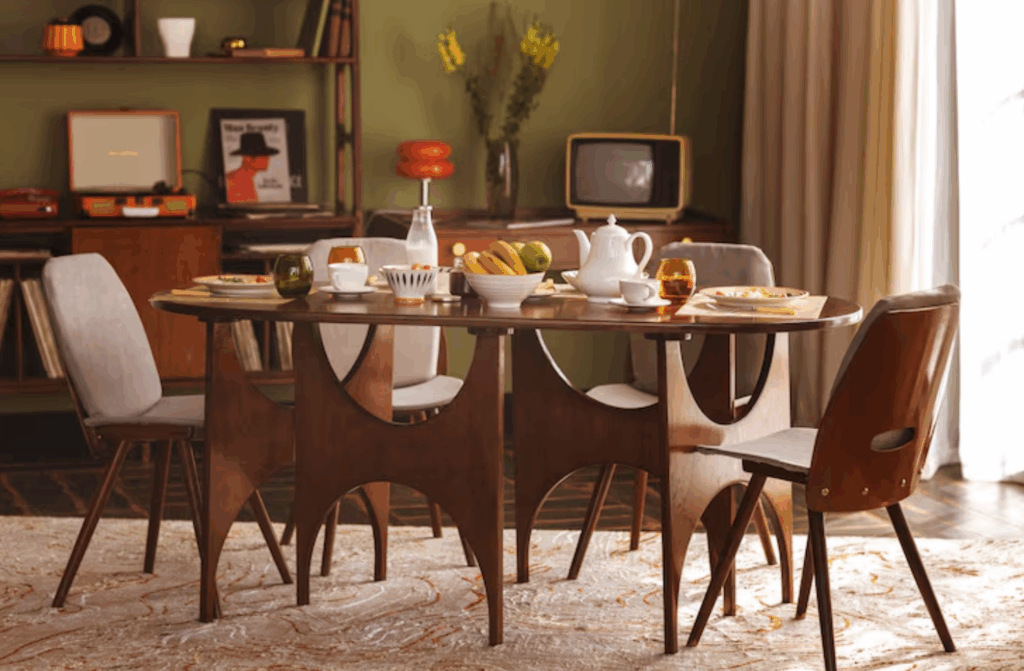
Dining Chairs
Dining chairs slide often. A tufted rug that’s too thick can cause legs to catch, making chairs difficult to pull out or push in. This can not only inconvenience users but also shorten rug life due to repeated fiber stress.
Best practice: Choose low to medium pile with high density for dining areas. If your aesthetic leans toward a plusher rug, ensure the chairs are lightweight or consider chair pads for the contact points.
Office Chairs
For chairs on casters, like desk chairs, low pile is almost always best. Casters have small contact points—tall piles can snag and flatten fibers rapidly, damaging the rug. A rug pad beneath a low pile helps keep everything smooth.
Accent and Lounge Chairs
Lounge chairs tend to stay in place. Here you have slightly more flexibility; a medium pile with high density can provide luxurious comfort without compromising stability.
5. Tables on Rugs — Stability Meets Style
Tables are stationary but impart significant weight through their legs or base. This means:
- High pile with low density: fibers compress under legs and stay compressed—leading to visible indentations.
- Medium pile with adequate density: offers some softness but retains form.
- Low pile with high density: the most stable option, especially under heavy tables or furniture that’s seldom moved.
Dining tables require special consideration because chairs moving at the edges add dynamic pressure. Leaving enough rug beyond the table edges (typically 24–30 inches) ensures chairs stay fully on the rug when pulled back, which reduces carpet wear and enhances room cohesion.
6. Practical Rules for Placing Rugs Under Furniture
A rug should anchor a furniture grouping—not float awkwardly beneath it.
Living Rooms
- Ideally, place all furniture legs on the rug.
- If space is limited, at least include the front legs of sofas and chairs.
- Medium pile, high density rugs work best here.
Dining Rooms
- Ensure the rug extends far enough so chairs don’t slip off when pulled out.
- Low to medium pile (≈ 0.3-0.75 in) is recommended here for ease of movement and cleanliness.
Bedrooms
- You can use higher pile for softness underfoot.
- Keep density high so mattress frame legs don’t leave long-lasting dents.
Entryways & Halls
- These are high traffic areas. Low pile with high density is ideal, as it resists crushing and is easier to clean.
7. Specialized Tips by Room
Different rooms exert different demands:
Living Rooms: Thicker rugs add warmth and acoustic dampening but should still be dense to avoid furniture marks.
Dining Areas: Heavy sliding from chairs means medium piles—or strategically chosen low piles—perform best.
Bedrooms: Luxury can take precedence; tall, densely tufted piles provide a plush retreat but check that bed frames and benches don’t crush the fibers.
Home Offices: Prioritize mobility; low pile, dense rugs with a good rug pad keep casters rolling smoothly.
8. Rug Pads: The Secret Weapon
Never underestimate a quality rug pad—it’s the unsung hero that:
- Prevents sliding under furniture.
- Adds extra cushioning without bulk.
- Reduces compression from heavy legs.
Especially with medium or high-pile rugs, a pad helps distribute weight, protecting fibers and prolonging life.
9. Common Mistakes (and How to Avoid Them)
| Mistake | Consequence | Better Approach |
| Choosing a thick, low-density rug for dining | Chairs snag, wear accelerates | Pick medium pile + high density |
| Placing only a small rug under table | Chairs catch edges | Extend rug beyond table edges |
| Heavy furniture on high pile | Deep indentations | Use rug pad and denser pile |
| Ignoring door clearance | Doors catch on rug | Check pile height before buying |
10. Conclusion
Rug thickness and pile density might sound technical, but they show up in real, everyday ways—how chairs slide, how tables feel underfoot, how long your rug keeps looking great. Thick, plush piles aren’t inherently bad—but without enough density, they’re vulnerable to crushing and furniture marks. Conversely, low piles with strong density offer superior performance but may sacrifice softness.
At Valhak, integrating thickness, density, and thoughtful placement guidance ensures your rugs not only look beautiful but perform beautifully with chairs, tables, and all your home’s key furnishings.
11. FAQs
Q1. Does thicker mean better for comfort?
Not always—thickness feels plush, but density determines if it stays that way.
Q2. Will my dining chairs slide on a high-pile rug?
Usually not easily; high pile can resist movement. Choose medium or low pile for smoother movement.
Q3. Should all furniture legs be on the rug?
Ideally, yes—especially in living rooms—to create visual cohesion and reduce wear.
Q4. Can a rug pad help with furniture placement?
Absolutely—pads improve stability, protect fibers, and prevent shifting.
Q5. How do I know if a rug is dense enough?
Press your fingers into it; if you see the backing easily, density may be low. High density feels firm and resilient.