When you walk across a rug — soft underfoot, patterned and plush — it’s easy to forget the complicated journey that turned yarn and fabric into something so inviting. At Valhak, we believe every rug carries that hidden story. In this article, I’ll take you behind the scenes of how tufted rugs are made — from the first spool of yarn, through the whirr of tufting machines, to the last touches before the rug is shipped to your home. My hope is to give you not just a blueprint of production, but an appreciation for the techniques, decisions, and craftsmanship that make a quality tufted rug.
1. What is Tufting — and Why It Matters
The word “tufting” might sound technical, but the basic idea is simple: yarn strands are inserted into a backing fabric (called the primary backing), forming a pile — loops or cut yarn — that becomes the surface you walk on.
Unlike traditional woven rugs — where warp and weft threads interlace and form the design by weaving around each other — tufted rugs build their surface by mechanically punching yarn through a prepared base, then locking it in place.
Why is this important? Because tufting offers a balance: design flexibility, lower cost, faster production — and, if done right, durable rugs that feel great underfoot. As a result, tufted rugs account for a large share of modern carpet and rug production worldwide.
At Valhak, we choose tufting because it allows us to bring you a wide variety of patterns, textures, and pile types — from plush, soft rugs for cozy living rooms to more durable, loop‑pile styles suited for high‑traffic areas.
2. Materials — What Goes Into a Tufted Rug
Before any machine whirs or needles dive, you need materials — and the choices here make a big difference in look, feel, and longevity.
Yarn
- Natural fibers: Wool, cotton — these give a soft, natural feel, warmth, and often more luxurious touch.
- Synthetics: Fibers spun from polymers — such as nylon, polyester, acrylic, or polyolefins — are very common. Among synthetics, nylon (e.g. nylon 6 or nylon 66) stands out for its balance of cost, resilience, and wear resistance.
- Pre‑dyed vs undyed yarn: Yarn can arrive pre‑colored (solution‑dyed), or undyed (greige yarn) and then dyed after tufting. Each method has tradeoffs. Dyeing afterward gives flexibility for color and pattern — especially useful for rugs with complex designs.
The yarn choice affects the texture — plush, soft, fluffy — as well as durability, how it wears underfoot, how it handles stains or cleaning, and how well it holds color over time.
Primary Backing
The foundation for tufting needs to be stable and strong. Most often, the primary backing is a woven polypropylene or polyester fabric.
This backing material anchors the tufts as the yarn is punched through. Without a robust backing, the rug would lack structure; tufts might pull out under stress or traffic.
Adhesives and Secondary Backing
Once yarn is tufted, it needs to stay in place. That’s where adhesives — typically latex or synthetic latex — come in. A layer of adhesive is applied to the backside of the rug to lock the tufts.
Then comes the secondary backing: a supplemental material (often woven synthetic fabric such as polypropylene, or sometimes jute, felt, canvas, or other materials) is bonded to the adhesive. This layer adds structural stability, helps the rug hold its shape, and gives it a finished, polished back.
Alternatively — for rugs intended for glue‑down floors or installations — a unitary backing approach may be used: a thick coat of latex or polymer is applied instead of a separate secondary fabric backing. This can be suitable for certain commercial installations.
3. The Tufting Machine — The Core of Modern Rug Production
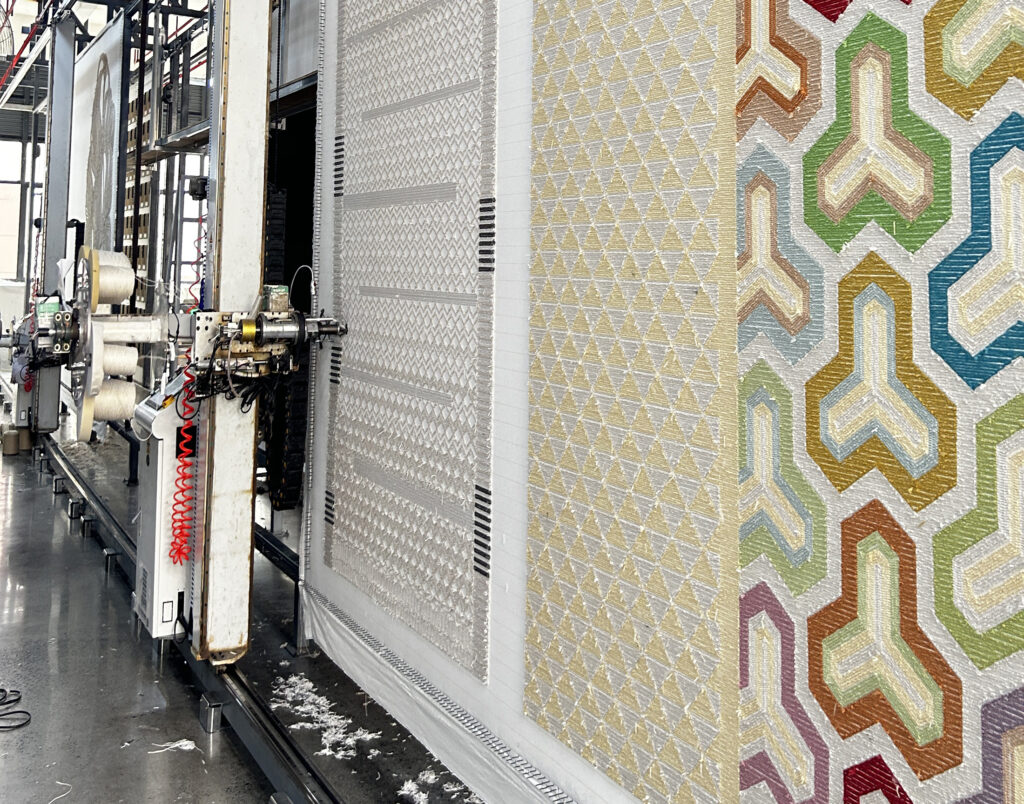
When you picture a factory producing rugs, the tufting machine is at its heart. It’s essentially a specialized carpet‑making loom, designed not for weaving but for punching yarn through backing.
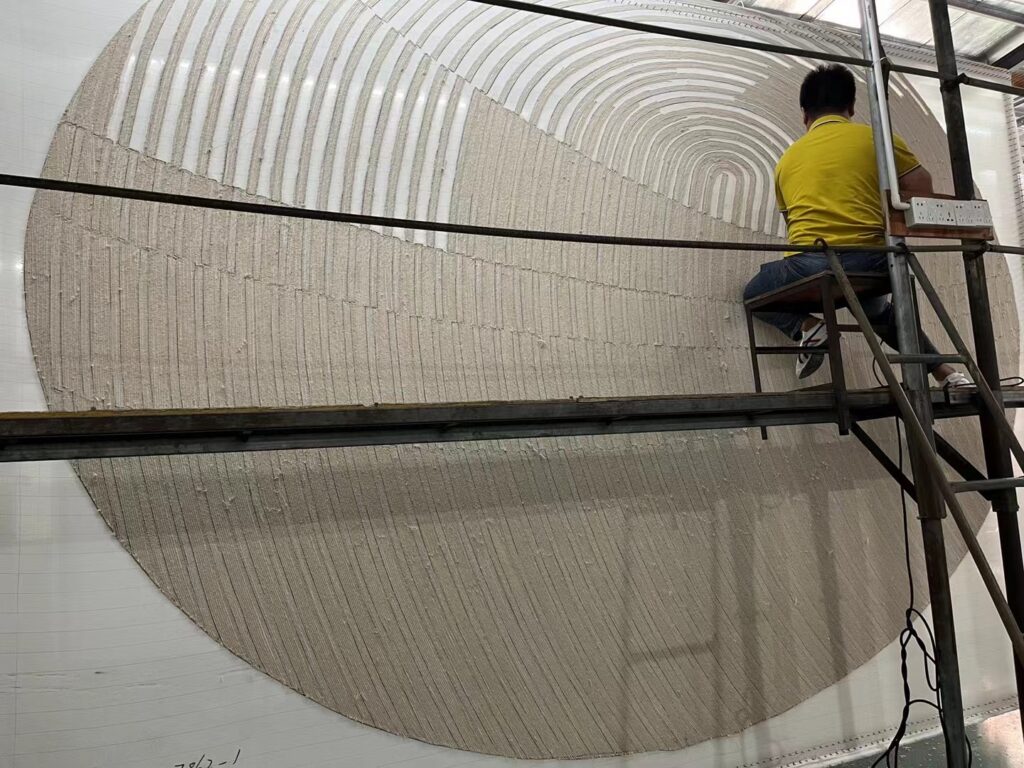
Key Components
- Creel & Yarn Feed System — spools of yarn (cones) sit on a creel; yarn is pulled through feed mechanisms that guide it to the needles.
- Needle Bars with Multiple Needles — hundreds (or even thousands) of needles operate in parallel, puncturing the backing and carrying yarn through to form tufts.
- Looper/Hooks and Knife (if cut pile) — underneath the needle plate, loopers or hooks catch the yarn to form loops; if a cut‑pile rug is desired, a knife or blade cuts the loops as they are formed.
- Backing Feed System — spiked rolls or feed rollers move the primary backing fabric through the machine at controlled speed and tension.
Tufting Techniques
The machine can create different pile styles, depending on the tooling and settings used:
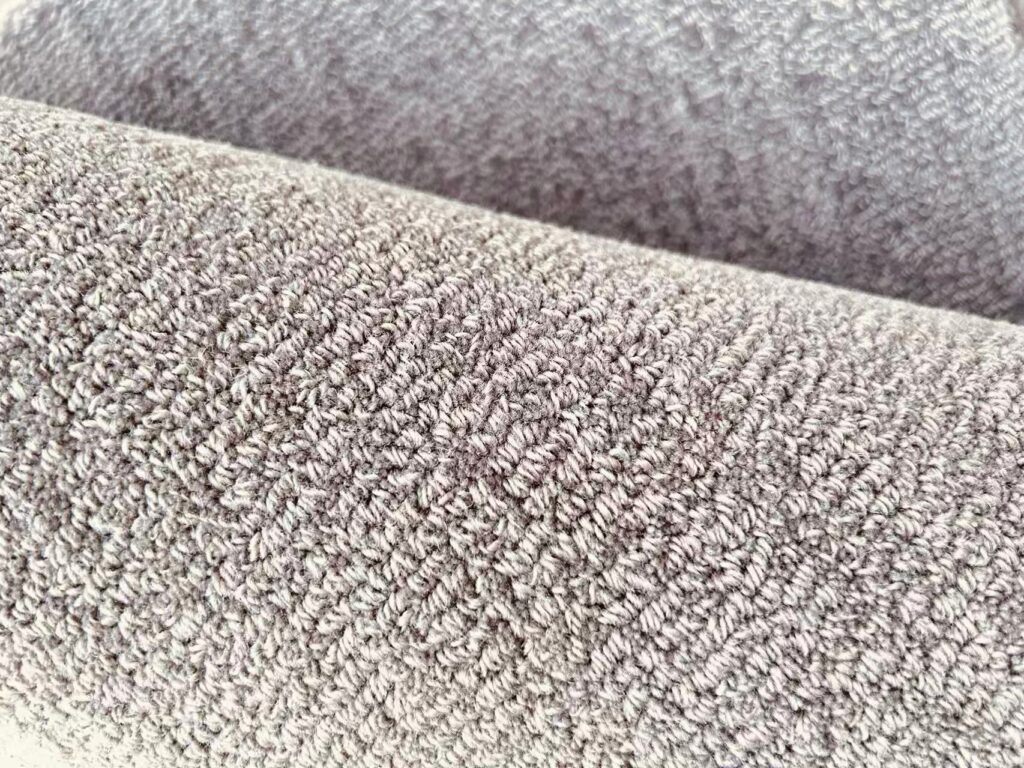
- Loop pile: loops of yarn remain intact, producing a rug surface made of continuous loops. This often results in a durable, textured surface — good for high-traffic areas.
- Cut pile: loops are cut during tufting, resulting in upright yarn strands on the surface — plush, soft, luxurious.
- Cut-loop / sculptured pile / multi-level pile: by selectively cutting some loops and leaving others, or by varying loop height, the machine can produce patterns, textures, and depth — even multi-level or carved effects.
Modern tufting machines — especially those used in large-scale production — may include computerized patterning systems: individually controlled needle bars, adjustable pile height, variable yarn feed — offering a wide design palette without sacrificing speed or consistency.
Because tufting is done from the backside of the backing cloth, the design must be mapped or transferred onto the backing in advance. Then the needles follow that blueprint as the backing moves through the machine.
In industrial contexts, these machines can work extremely fast — thousands of stitches (or tufts) per minute — making rug production efficient and scalable.
4. Post-Tufting: Back Coating, Secondary Backing & Stabilization
Tufting the yarn into the primary backing gives you the surface, but without additional support, the rug would lack durability. That’s where back coating and secondary backing come in.
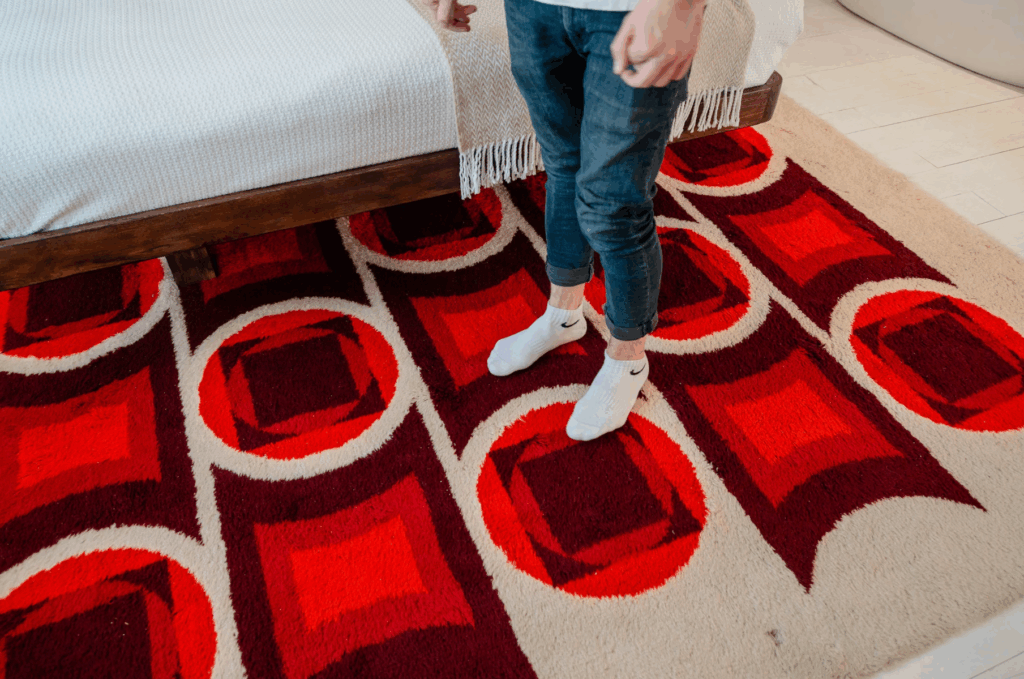
Back Coating: Fixing the Tufts
Immediately after tufting, the backside of the rug (the primary backing now filled with yarn) is coated with an adhesive — frequently a latex or synthetic latex compound.
The latex penetrates around the yarn ends, securing them into the backing so the tufts don’t pull out under use. Many traditional tufted carpets use this latex backing as their primary stabilization measure.
In many cases, once the latex is applied, the carpet is heated or cured (for example, in an oven) to set the adhesive fully.
Secondary Backing: Adding Structure and Stability
Over the adhesive, a secondary backing fabric is laminated. This secondary layer — often woven polypropylene, polyester, or sometimes natural fibers like jute — provides structural strength, dimensional stability, and ensures the rug lies flat.
This two-step backing (primary + adhesive + secondary) is what distinguishes tufted rugs from simple fabrics with threads poked in — it’s what ensures your rug holds together under years of footsteps, furniture weight, and shifting.
In some specialized rugs — for example, those designed for direct glue-down installations (e.g. commercial or institutional floors) — manufacturers may skip a separate secondary backing and instead apply a thick latex or polymer “integral backing.”
5. Finishing: Shearing, Carving, Edging, Quality Control
With tufts secured and backing applied, the rug begins to resemble the final product. But finishing is where detail, texture, and polish come together.
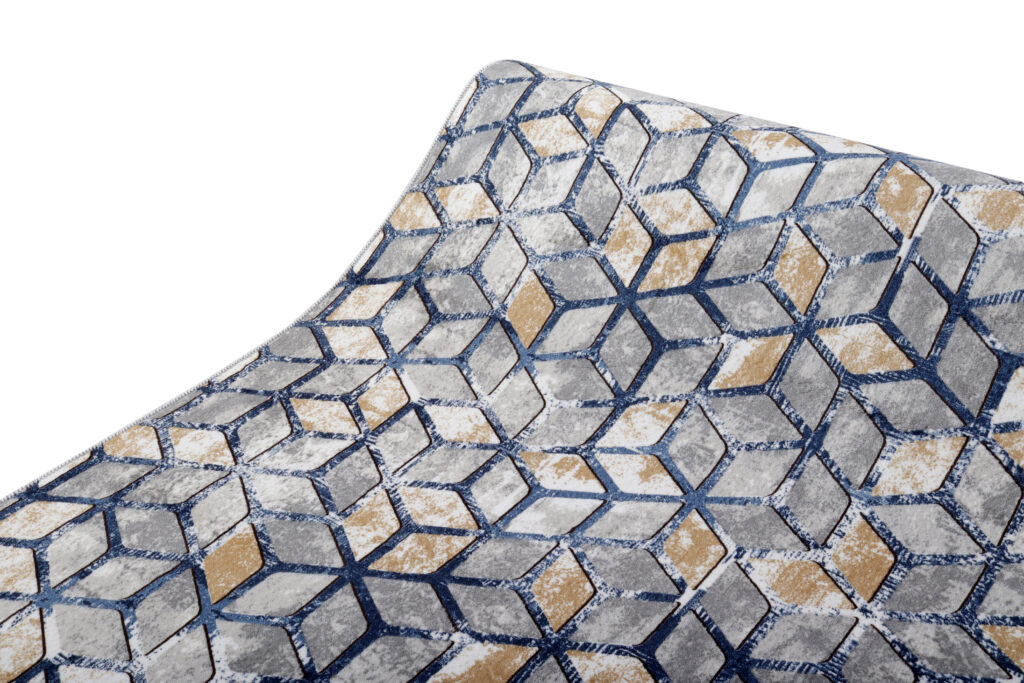
Shearing / Shearing the Pile
For cut-pile rugs, after tufting and backing, the pile is often sheared — trimmed to an even height — to give a uniform and soft surface.
Shearing ensures that all yarn ends are at the same level, that the surface feels smooth, and that no stray loops snag or stand out.
Carving / Texture & Pattern Enhancement
If the rug design calls for depth, texture, or multi-level structure — perhaps part of the pattern is higher than another, or different pile heights create a sculpted effect — carving is used. This involves selectively cutting loops or pile to different heights after tufting, producing relief, pattern depth, and tactile variation.
This step gives tufted rugs a surprising level of sophistication — not just flat, uniform texture, but dimensional, almost carpet-like artistry.
Edge Finishing / Binding
To prevent fraying and ensure durability, the edges of the rug are often bound or serged. This stabilizes the edges, maintains shape, and gives the rug a clean, polished look.
Final Inspection & Quality Control
Before a rug leaves the factory, thorough inspections are done. Quality control checks include verifying uniform pile height, ensuring even adhesive and backing adhesion, confirming pattern accuracy, checking dimensions, and ensuring no loose tufts or incomplete sections.
Only when a rug meets all criteria — both structural and aesthetic — is it rolled, wrapped, and prepared for shipping. That’s how we at Valhak ensure every rug delivers on our standards of comfort, durability, and design fidelity.
6. Why the Manufacturing Process Matters — For You, the Buyer
It might seem like a lot of technical detail — yarn types, machines, adhesives. But all of these choices influence:
- Longevity and wear: Good backing, strong adhesive, quality yarns → a rug that holds up under foot traffic.
- Feel and comfort: Wool or quality synthetic yarn, correct pile height, and even shearing make the rug soft underfoot.
- Aesthetic quality: Accurate tufting, clean finishing, carving and pattern depth make the rug look consistent with the intended design.
- Value for money: Because tufting is efficient, it enables a balance between quality and affordability — letting you enjoy beautiful rugs without the cost of hand-knotted or fully woven carpets.
At Valhak, we treat manufacturing as more than “just production.” It is the moment when design becomes reality — when raw materials transform, under skilled hands and precise machines, into a rug that brings warmth and beauty into your home.
7. Challenges & What We Watch Out For (aka Why Manufacturing Quality Varies)
Not all tufted rugs are created equal. Because the process involves multiple steps — and each step offers room for shortcuts or cost-cutting — quality may vary widely between producers. Some of the pitfalls:
- Skimping on adhesive or using low‑quality glue — leading to loose tufts or shedding over time.
- Weak or cheap primary or secondary backing — which may distort, shift, or wear unevenly.
- Poor finishing: uneven shearing, sloppy edges, inconsistent pile height — which affect both look and feel.
- Using low-quality yarn or undyed yarn that’s poorly dyed — risking fading or wear.
- Omitting final quality control.
That’s why at Valhak we adhere to high standards at each stage: material sourcing, precise tufting, proper latex application, robust backing, careful finishing, and rigorous inspection. Your rug shouldn’t just look good today — it should look and feel good for years.
8. The Human Touch — Why Craft + Machine Both Matter
Tufted rugs occupy an interesting halfway point. They’re not hand-knotted — but neither are they cheap throwaways. Modern tufting machines give speed and consistency; but the human decisions still matter: which yarn to choose, how to design and map patterns, how heavily to coat adhesive, how neatly to finish edges.
In many ways, a high‑quality tufted rug is evidence of successful collaboration between human craftsmanship and industrial precision. At Valhak, we prize that collaboration. We believe each rug should carry not just a pattern — but integrity, durability, and a sense of care.
9. Typical Tufted Rug Production Flow — Step by Step (Summary)
Material Preparation: Yarn selection (natural or synthetic), primary backing fabric, adhesive, secondary backing.
Backing Set-Up: Primary backing stretched on a frame (in hand‑tufted cases) or prepared for machine feed (in industrial production).
Design Transfer (hand‑tufted) or digital pattern setup (machine‑tufted).
Tufting: Yarn inserted through backing via tufting gun (hand) or tufting machine (industrial), forming loops or cut piles.
Dyeing (if yarn was undyed) — before or after tufting depending on the process.
Back Coating / Adhesive Application: Latex or synthetic adhesive applied to the back to lock tufts.
Secondary Backing Lamination: A secondary backing layer is applied for stability and durability.
Finishing: Shearing (cut-pile), carving (if pattern/texture needed), edge binding, trimming.
Quality Control: Inspection for adhesive uniformity, tuft security, pile height, pattern accuracy, overall finish.
Packaging & Shipping: Once approved, rugs are rolled, wrapped, and prepared for delivery. (As you’d expect at Valhak.)
10. Why Valhak’s Approach Matters
As a rug brand focused on quality and customer trust, Valhak doesn’t cut corners. That means:
- Carefully sourced yarns — synthetic or natural — chosen to match the intended use (e.g., wool for softness, nylon for durability).
- Primary backing materials that meet strength and stability standards.
- Backing and adhesive processes done under controlled conditions, ensuring tuft security and rug longevity.
- Finishing done by skilled artisans, ensuring edges, pile heights, and patterns are precise and consistent.
- Rigorous quality control before any rug leaves our facility.
For you, the result is a rug that doesn’t just look good when new — but stays beautiful and functional for years. That’s the true value of a well-made, thoughtfully manufactured tufted rug.
11. Conclusion
The journey from yarn spool to floor — for a tufted rug — is a carefully orchestrated blend of material science, mechanical precision, and human craftsmanship. At each step — from tufting machines punching thousands of yarns per minute, to latex bonding and secondary backing lamination, to final shearing, trimming, and inspection — key decisions and quality measures shape the final product.
For a brand like Valhak, this process isn’t just manufacturing. It’s a commitment to durability, aesthetics, and value. And for you, the buyer, it means a rug you can trust: beautiful, comfortable, and built to last.
In a world of fast furniture and fleeting trends — a well-made tufted rug is something timeless.
12. FAQs
Q: What’s the difference between tufted rugs and hand-knotted rugs?
A: Tufted rugs are made by punching yarn into a backing fabric then securing it with adhesive and backing — a faster, less labor‑intensive process. Hand‑knotted rugs are created by tying individual knots by hand onto a loom, which is far more time‑consuming and labor‑intensive.
Q: Why is a secondary backing needed?
A: The secondary backing (applied over the adhesive) helps stabilize the rug, hold the tufts securely, keep the rug’s shape, and make it lay flat. Without it, the rug would be weaker, less durable, and more prone to distortion.
Q: What is the difference between loop pile and cut pile in tufted rugs?
A: Loop pile leaves the yarn loops intact, producing a textured, durable surface — good for high traffic. Cut pile means the loops are cut as they are formed, creating upright yarn strands and a soft, plush surface — cozy and often more luxurious.
Q: How does the choice of yarn affect a tufted rug?
A: Yarn type influences feel, durability, colorfastness, and maintenance. Natural fibers (like wool) feel soft and warm; synthetics (like nylon or polyester) offer durability and easy maintenance. Pre‑dyed yarn or properly dyed post‑tufting ensures stable color.
Q: How do I know if a tufted rug is well made?
A: Look for even pile height and density, clean edges (bound or serged), a firm but flexible backing (adhesive + secondary backing), no loose tufts when gently tugged, and consistent pattern and color. Good-quality rugs also feel solid underfoot and keep shape over time.